Uphill and Against the Wind: Finding Strength in Running, Hiking, and a Shifting World

What does resilience really mean? Lately, Iโ€™ve been thinking about how we respond to crisisโ€”both personally and globally. Whether itโ€™s a marathon, a grueling hike, or the accelerating climate crisis, one thing is clear: resilience isnโ€™t accidental. Itโ€™s something we build, something we choose.

Reading Naomi Kleinโ€™s The Shock Doctrine made me see resilience in a different light. The book lays out, in unsettling detail, how disastersโ€”whether natural or manufacturedโ€”often reshape societies in ways that donโ€™t always benefit the people most affected. While communities are still reeling, policies are rewritten, resources are privatized, and somehow, those in power always seem to land on their feet while everyone else scrambles to rebuild. It made me wonder: When things get tough, who gets to recover? Who gets left behind? And how do we build resilience that is fair, sustainable, and realโ€”not just for individuals, but for entire communities?

This past year, Iโ€™ve felt that question in my own wayโ€”on the pavement, on the trails, and in the slow climb toward climate action. The NYC Marathon reminded me that no matter how well you plan, unexpected challenges will test you. The body does what it wants, the course throws in surprises, and suddenly, itโ€™s less about executing a perfect race and more about adapting, problem-solving, and pushing forward in a way thatโ€™s sustainable.

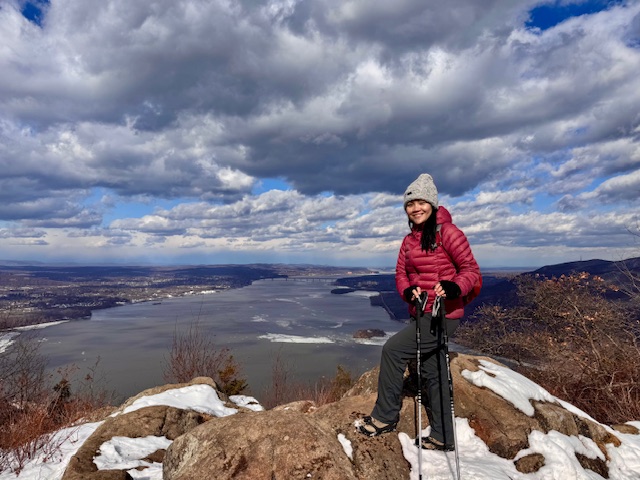
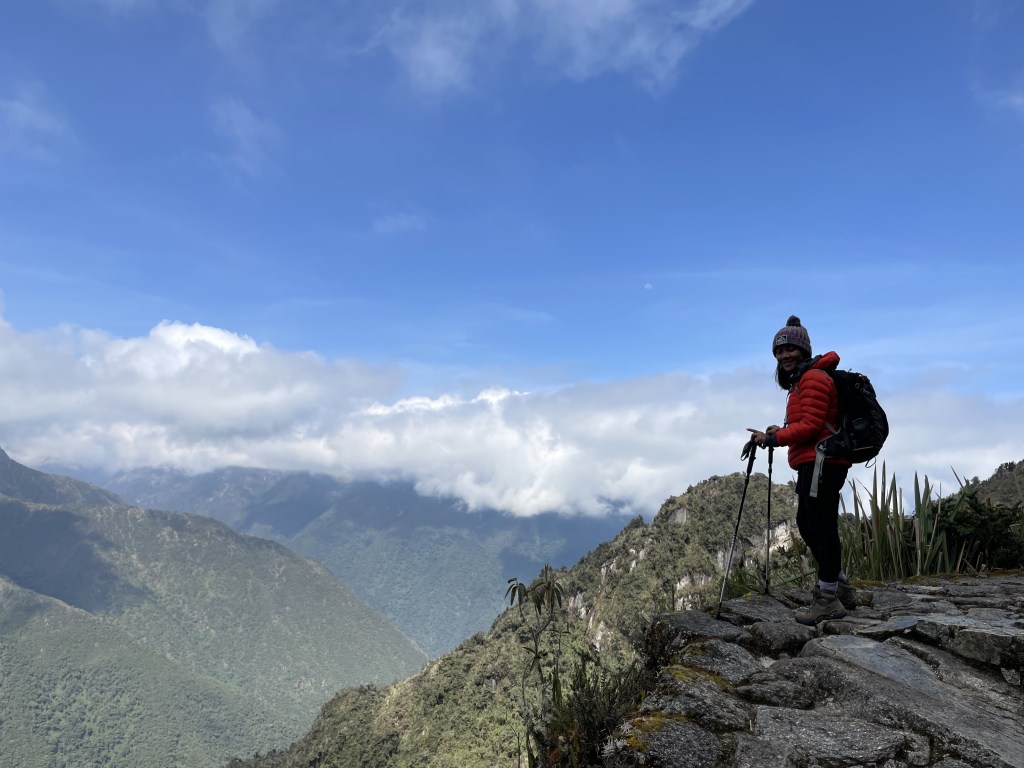
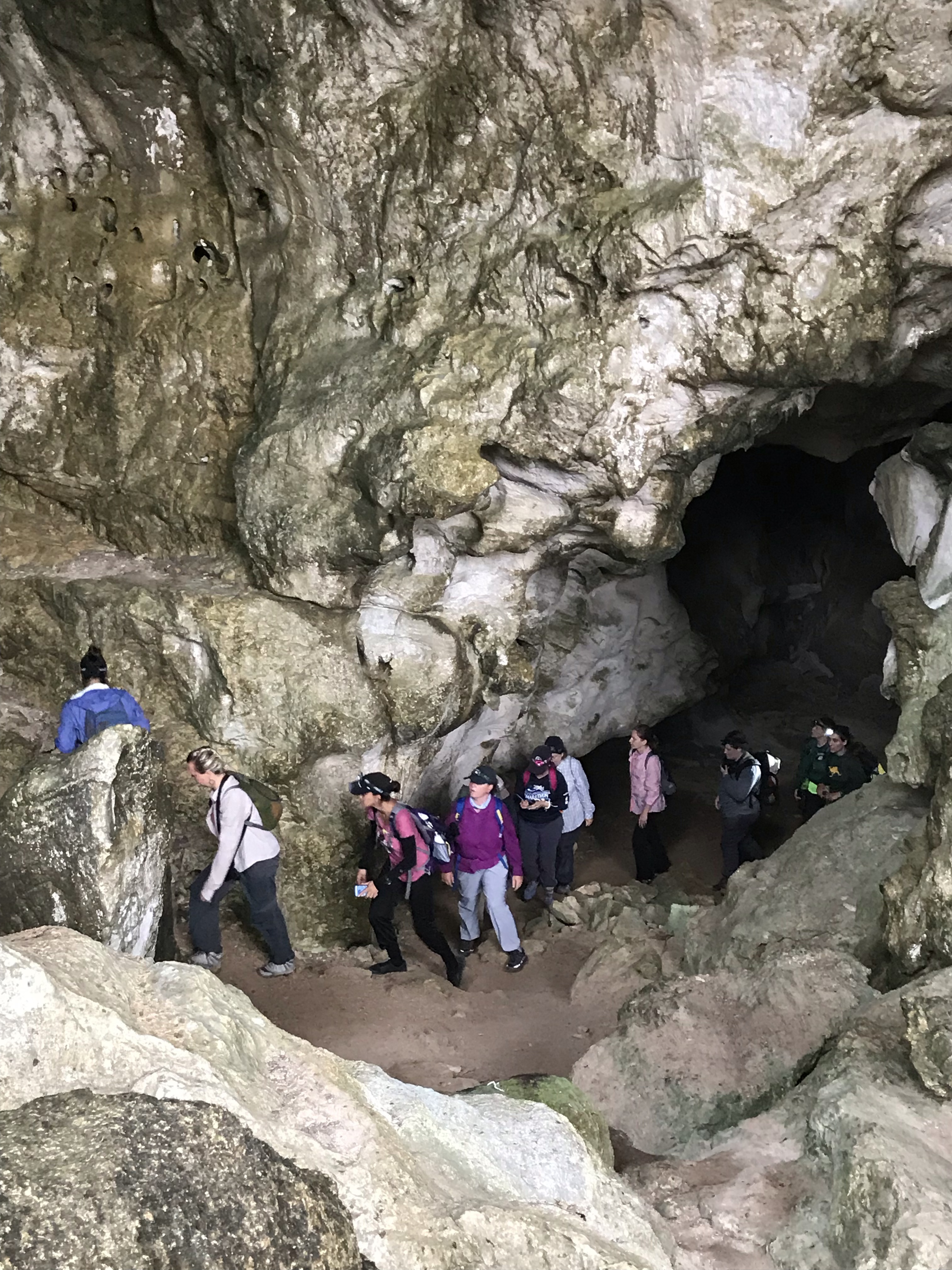
Hiking teaches the same lesson, but in a different way. I think about those long trails where the elevation gain sneaks up on youโ€”when youโ€™re an hour in, your legs are burning, and the peak still looks impossibly far away. If you rush too fast, you burn out. If you donโ€™t pace yourself, you risk not finishing at all. Hiking teaches patience. You learn to read the terrain, adjust your footing, and conserve your energy when needed. Progress isnโ€™t always a straight pathโ€”sometimes you hit a false summit, sometimes you descend before climbing again, and sometimes the hardest stretches are the ones right before the view opens up.

And that brings me to the climate institute I attended at Columbia University. Listening to climate scientists and educators discuss where we are and where weโ€™re headed, I realized just how much this moment in history feels like one of those long, grueling hikesโ€”or maybe a marathon with no mile markers. The signs are everywhere: rising temperatures, extreme weather, food insecurity. The path forward is steep, and we know it. And yet, so much of the response still feels hesitant, slowed by bureaucracy, misinformation, and short-term thinking.

One thing I keep coming back to is that the problem isnโ€™t a lack of knowledge or solutionsโ€”we have them. The technology exists, the science is clear, and communities on the frontlines of climate change have been adapting for generations. Take Rotterdam, for example. Instead of waiting for the next flood to devastate the city, they redesigned their infrastructureโ€”parks that double as reservoirs, floating buildings, and public spaces that can absorb excess water when needed. They arenโ€™t waiting to react; theyโ€™re preparing to thrive. And yet, in many places, it often feels like weโ€™re standing at the base of a mountain, arguing over whether we should start climbing, while those who benefit from the status quo insist that the storm clouds overhead are just an illusion.

The reality, of course, is that the climb has already begunโ€”whether weโ€™re ready or not. The shocks are here: floods, fires, droughts, ecosystems unraveling faster than expected. And much like in endurance sports, the key isnโ€™t just brute force or pushing forward recklessly. Itโ€™s about strategy, adaptation, and knowing when to accelerate change and when to recover to keep moving forward.

One thing that stood out to me at the climate institute was that resilience isnโ€™t just about individual survivalโ€”itโ€™s about collective action. No one hikes a technical mountain alone. No marathon happens without volunteers at water stations, pacers keeping the rhythm, and crowds cheering runners toward the finish. Climate resilience is the same. Itโ€™s not just about surviving the next big storm, but about building communities that can withstand and recover togetherโ€”by investing in sustainable infrastructure, prioritizing conservation, and listening to the people who have been navigating these challenges long before they became headline news.

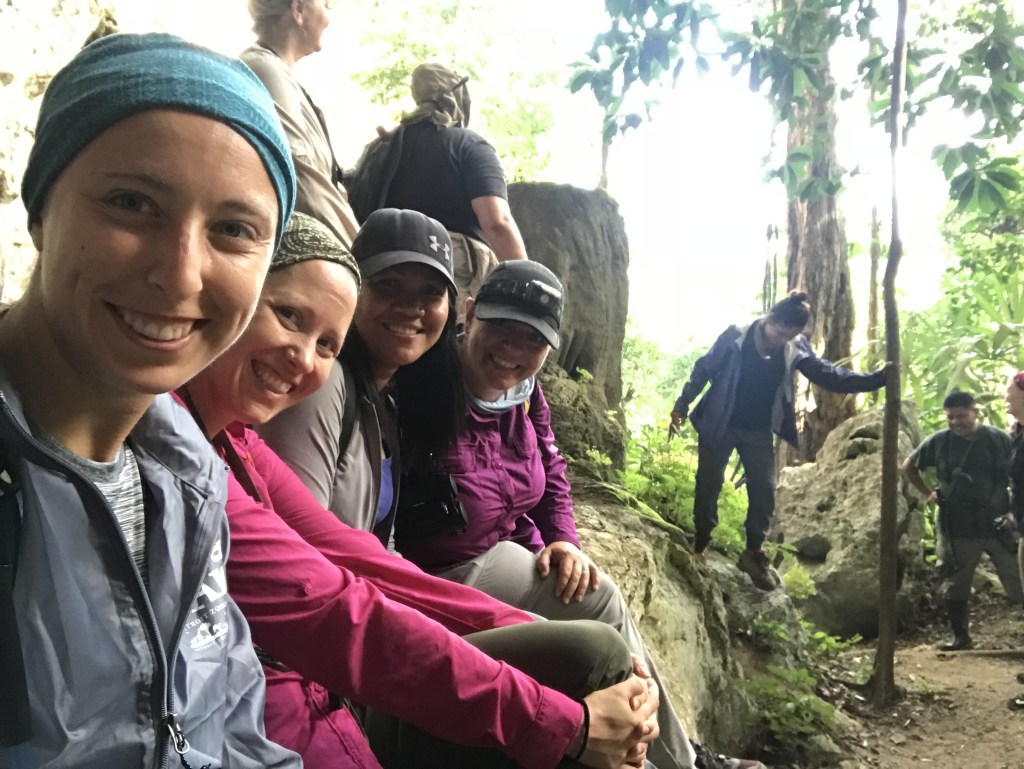
As I plan the next hike, as I continue my training, and as I work with my studentsโ€”who will inherit the consequences of todayโ€™s choicesโ€”I keep coming back to this: the way forward isnโ€™t easy, but itโ€™s not impossible. Like a tough trail or a long race, the hardest stretches are often the ones right before things start to open up. And if thereโ€™s one thing Iโ€™ve learned from years of running and hiking, itโ€™s that persistence matters.

So we keep going. We pace ourselves. We adapt. And most importantly, we look out for each otherโ€”because while no one reaches the summit alone, the best views are the ones we share.

Balancing Connection and Quiet: My Goals for 2025


If 2024 had been a journey, Iโ€™d say there were a few stops I didnโ€™t quite make. I skipped events, turned down invitations, and spent more time recharging than I probably neededโ€”not because I didnโ€™t care, but because I felt overwhelmed. As an introvert, I know I need quiet moments to refuel, but last year, I leaned a little too hard into solitude. While some friends understood, others might have thought Iโ€™d completely fallen off the map. (Spoiler: I didnโ€™t. I was just hiding out with tea and a good book.)

As I think about this balance, I keep coming back to Quiet by Susan Cain. Itโ€™s a book that redefined how I see myself. Cainโ€™s words helped me embrace the idea that introverts arenโ€™t antisocial or disconnected; we just thrive in different ways. Weโ€™re wired to favor depth over breadth, to seek meaningful connections over fleeting interactions. Thatโ€™s not a weaknessโ€”itโ€™s a different kind of strength.

One of my favorite takeaways from Quiet is the idea of the โ€œsweet spotโ€ for introverts: a space where we can honor our need for solitude while still engaging with the world around us. Itโ€™s not about pushing ourselves to be someone weโ€™re not; itโ€™s about finding ways to connect authentically. For me, this means creating smaller, more meaningful moments of connection instead of overloading myself with social obligations.

Another insight from the book that stuck with me is how introverts bring unique energy to relationships. We may not dominate a conversation, but we listen deeply. We may not be the life of the party, but weโ€™re often the ones creating thoughtful, lasting bonds. These qualities are just as valuable as being outgoing and expressiveโ€”theyโ€™re simply different.

Reflecting on 2024, I see moments where I could have leaned into this strength instead of retreating entirely. This year, I want to focus on finding that balance. I donโ€™t need to say yes to every event, but I want to show up intentionally. Whether itโ€™s sending a heartfelt text, spending time with a close friend over coffee, or just being fully present, these small moments can have a big impact.

At the same time, Quiet reminded me that solitude isnโ€™t just necessaryโ€”itโ€™s powerful. Some of the best parts of any journey are the pauses: sitting on a bench to soak in a view or wandering off the beaten path to enjoy the silence. Taking a step back isnโ€™t about disconnecting; itโ€™s about creating space to recharge and reflect.

As for meeting new people? Thatโ€™s a little outside my comfort zone, but Cainโ€™s book encouraged me to approach this with curiosity. Building connections doesnโ€™t mean being the loudest in the room. Sometimes, a simple smile, a thoughtful question, or showing genuine interest is enough to create something meaningful.

So hereโ€™s to 2025: a year of finding my sweet spot, showing up for the people I care about, and savoring the quiet moments along the way. To anyone else navigating this balance, youโ€™re not alone. We can honor who we are while still creating space for connection and growth.

Whatโ€™s one thing youโ€™re excited to explore in 2025? Whether itโ€™s a relationship, a personal goal, or a new adventure, Iโ€™d love to hear about it. Letโ€™s inspire each other to make this year a journey worth remembering.

2024: Adventures, Finish Lines, and Unforgettable Moments

Looking back on 2024, it feels like a year packed with discoveryโ€”breathtaking adventures, meaningful connections, and milestones that made it unforgettable. From exploring jaw-dropping destinations to chasing finish lines and sharing traditions, this year was all about living fully, laughing often, and cherishing the people and experiences that make life special.

Memorable Travels

Travel was at the heart of 2024, taking me to incredible places that left me inspired, awe-struck, and grateful.

Iceland: A Land of Wonders

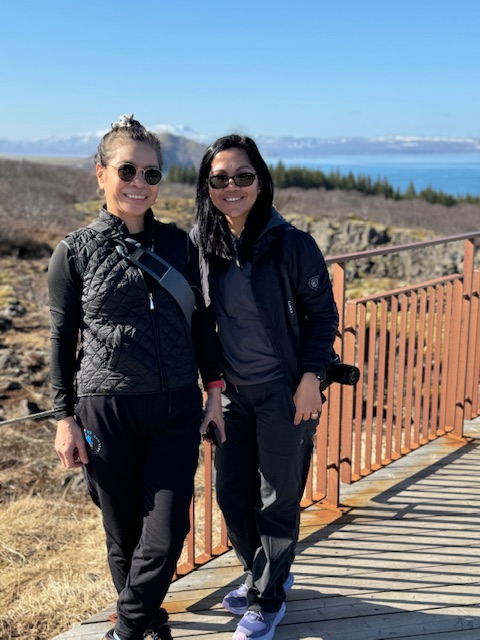
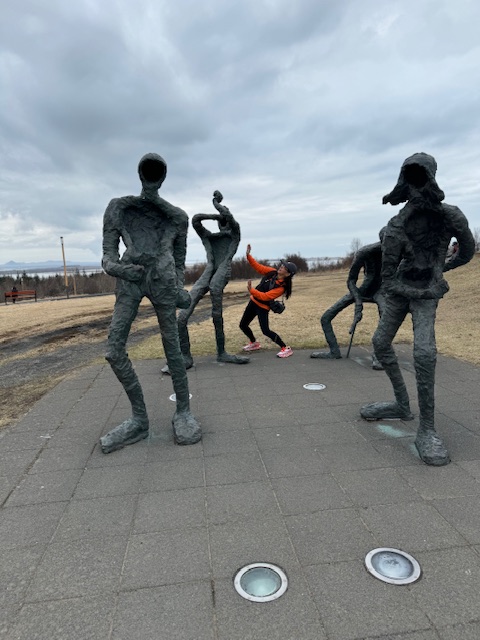
Iceland felt like stepping into a storybook, with landscapes so surreal they seemed otherworldly. My friend Lorie and I began our adventure with the Golden Circle, marveling at the roar of Gullfoss Waterfall and standing between tectonic plates at รžingvellir National Park. Watching Strokkur geyser erupt into the sky was the perfect kickoff to this magical trip.

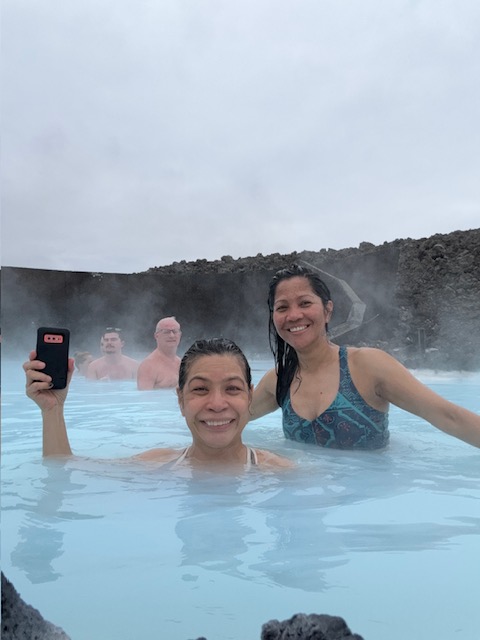
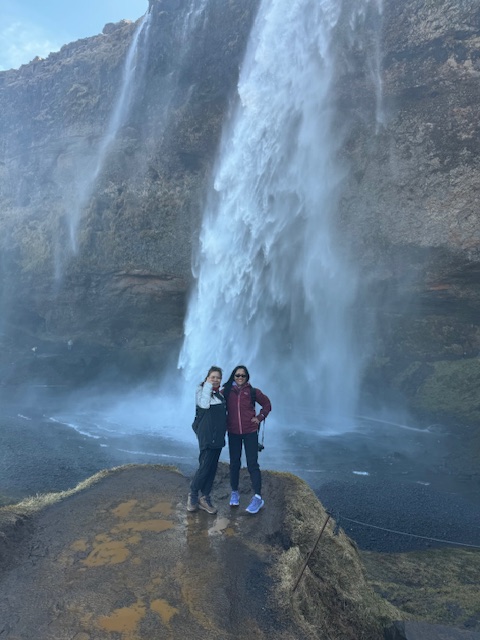
We chased waterfalls like Seljalandsfoss, where we walked behind a shimmering curtain of water, and Skรณgafoss, a towering cascade that felt like natureโ€™s grand performance. The moody black sands of Reynisfjara Beach added an almost cinematic touch, and unwinding at the Blue Lagoon and Sky Lagoon was pure bliss after days of adventure.

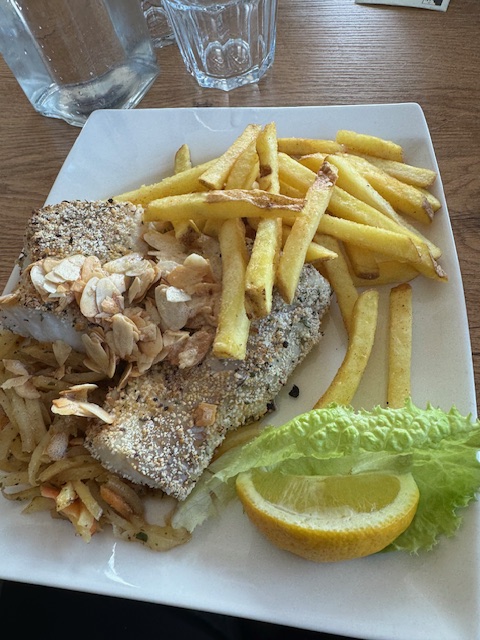
Iceland even surprised us with its food! From creamy plokkfiskur to geothermal-baked rye bread, every bite was a taste of tradition. And yes, I braved the fermented sharkโ€”itโ€™s definitely an acquired taste! Icelandโ€™s wild beauty, warm people, and rich culture made it an unforgettable journey.

Ecuador: The Galapagos and Beyond

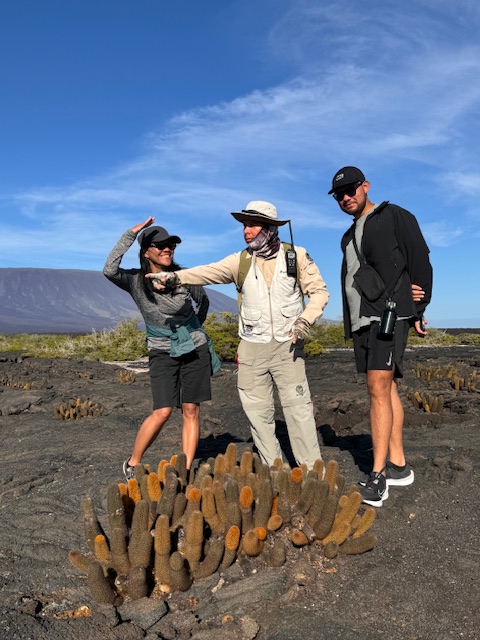
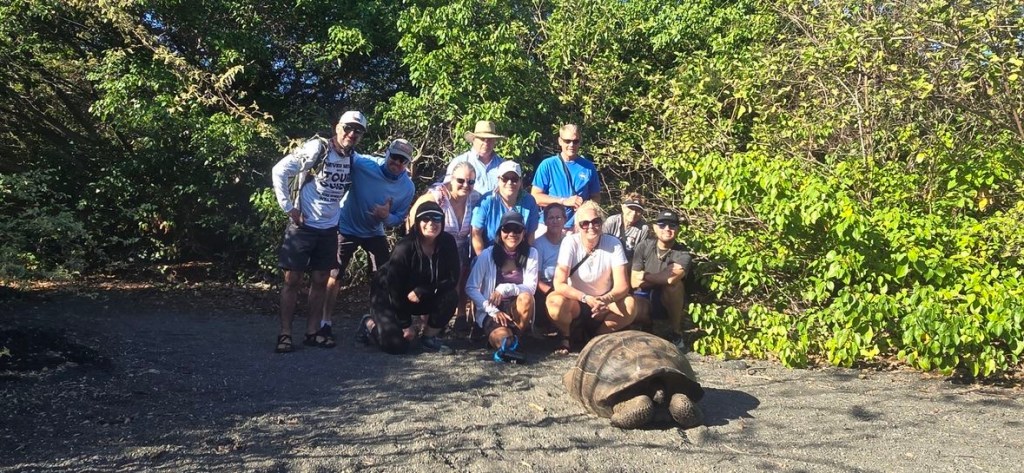
Ecuador offered a perfect mix of history, culture, and jaw-dropping natural wonders, with the Galapagos Islands as the crown jewel. Snorkeling with playful sea lions, spotting blue-footed boobies doing their signature dance, and standing inches from ancient giant tortoises felt like being in a real-life nature documentary. The islands were alive with vibrant wildlife, from marine iguanas basking on volcanic rocks to colorful schools of fish darting through crystal-clear waters.

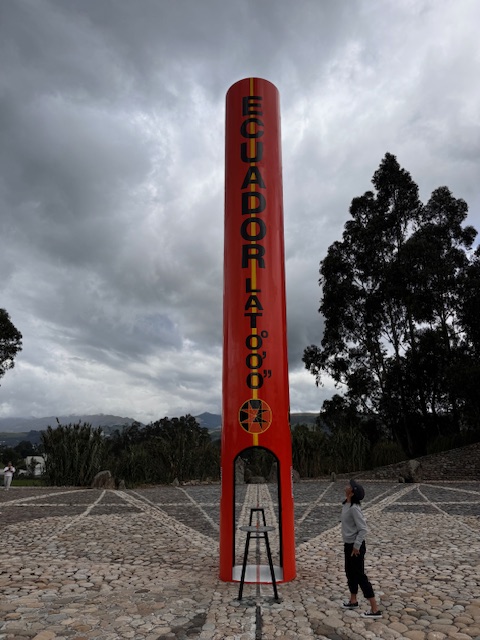
Back on the mainland, Quito charmed us with its rich history. My friend Intiaz and I explored the grand Basilica del Voto Nacional and the glittering La Compaรฑรญa de Jesรบs. Standing with one foot in each hemisphere at Mitad del Mundo was a thrill, while our visit to the Intiรฑan Solar Museum brought the geography of the equator to life in such a unique way.

Even a cloudy day couldnโ€™t dim the magic of the Antisana Ecological Reserve. We spotted majestic Andean condors soaring during a cozy lunch nearby, a moment of serendipity that felt like natureโ€™s gift. Wrapping up the trip at Otavaloโ€™s vibrant market, we wandered through bursts of color, culture, and craftsmanship, finding treasures to bring home.

Singapore: Family, Food, and Fun

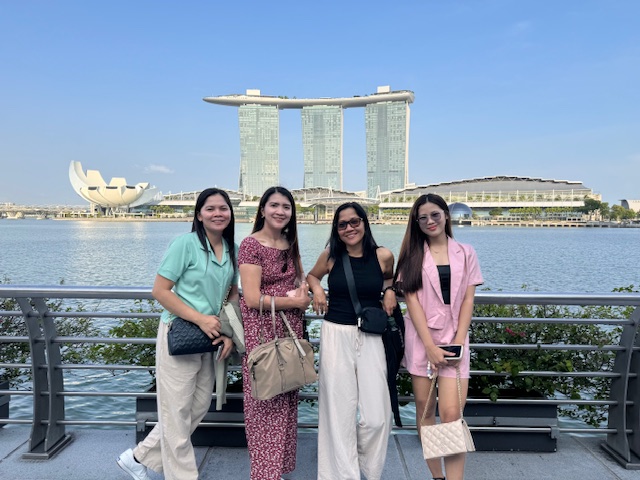
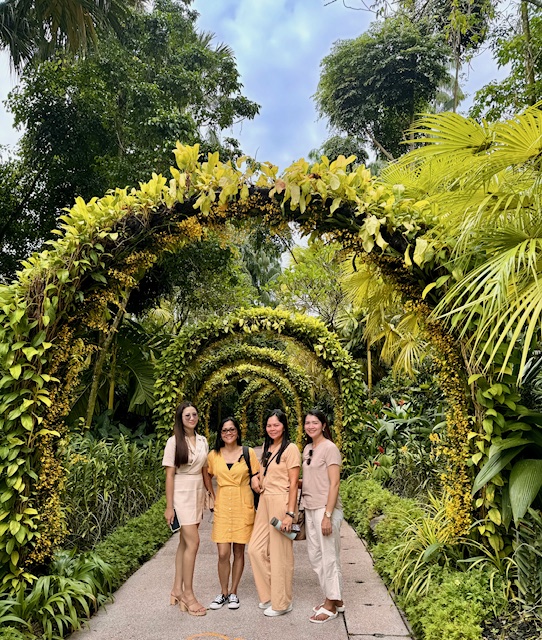
Singapore was a family adventure to remember. Exploring it with my sisters Mae and Nanette and my niece Jassel made every moment extra special. Gardens by the Bay was like stepping into a futuristic dream, with the Cloud Forest and Flower Dome bursting with lush beauty. At night, the Supertree Grove came alive with lights, dazzling us with its spectacular show.

The Merlion greeted us proudly at Marina Bay, symbolizing Singaporeโ€™s unique mix of modernity and tradition. We strolled through Chinatown, soaking in its history, and marveled at the vibrant colors and flavors of Little India. Every hawker center meal was an adventureโ€”laksa, Hainanese chicken rice, and other iconic dishes quickly became favorites.

Singaporeโ€™s seamless blend of old and new, paired with the warmth of family, made this trip an absolute treasure.


Running Toward New Goals

Running defined much of 2024, bringing challenges, growth, and moments of pure joy. I set out to build consistency and strength, knowing big races lay ahead.

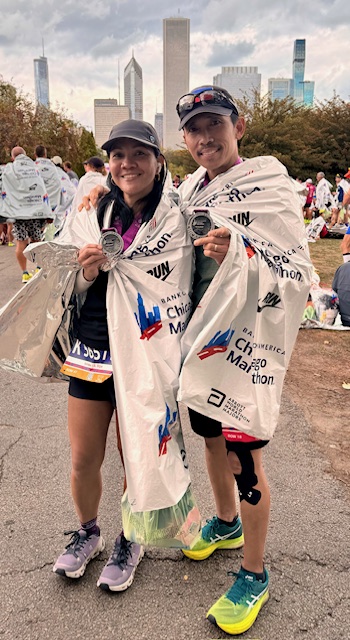
This year, I completed three half marathons and two full marathons, each with its own story. The Chicago Marathon in October marked my third Abbott World Marathon Major, and it felt like a celebration of grit and determination. The flat course and roaring crowds pushed me to the finish line with pride and gratitude.

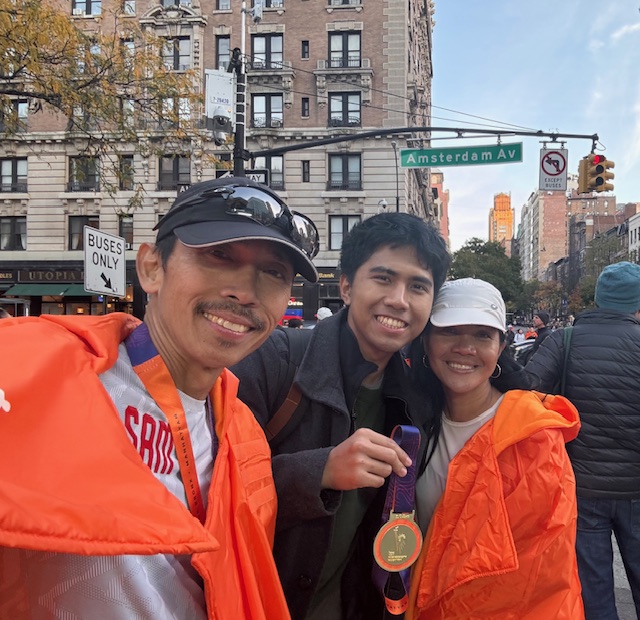
In November, I returned to the iconic New York City Marathonโ€”a race that never loses its magic, no matter how many times Iโ€™ve run it. The five boroughs were alive with energy, and the cheers of spectators carried me through every mile. Central Parkโ€™s rolling hills and the final stretch to the finish line felt exhilarating and deeply personal.

Sharing these moments with my husband made the journey even more meaningful. From early morning training runs to celebratory post-race meals, running became a shared passion that strengthened our bond. This year wasnโ€™t just about medalsโ€”it was about resilience, connection, and the sheer joy of lacing up and hitting the road.


Growing and Connecting

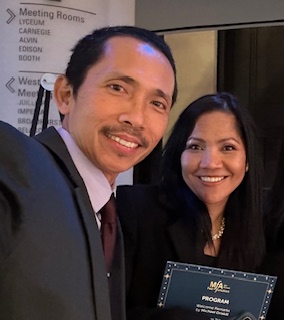
Workwise, 2024 was filled with opportunities to grow and collaborate. Through Math for America, I participated in several mini-courses that broadened my knowledge and gave me fresh ideas for the classroom. The chance to connect with passionate educators reminded me how energizing shared learning can be and how much I love being part of a creative, curious community.

These experiences reignited my love for teaching and reinforced the importance of curiosity and adaptability. Helping students explore the world around them continues to be one of the most rewarding parts of my life.


Community and Culture

Outside of work and travel, 2024 was about celebrating traditions and finding joy with my Filipino family here in NYC. Being part of the Jeanne Jugan Choir for over a decade has been a constant source of connection and happiness. Singing with friends who feel like family has brought music and warmth to our performances and to the people we sing for. Every song feels like sharing a piece of home.

For the past few years, Iโ€™ve also joined the Sinulog celebration, dancing to honor tradition and culture. Iโ€™m not the best dancer (trust me, I know!), but I give it my all, and the energy of the event always makes it worthwhile. The vibrant colors, rhythmic music, and shared pride create a sense of belonging thatโ€™s hard to put into words.

These moments reminded me of the power of community and the beauty of keeping traditions alive.


Looking Ahead

As 2024 comes to a close, my heart is full of gratitude. This year brought adventures that expanded my horizons, milestones that pushed me to grow, and connections that filled my life with joy. Hereโ€™s to 2025โ€”may it bring even more laughter, love, and unforgettable moments!

Engaging Students in Sustainability & Environment Conservation

My journey with AIP

It was one Saturday in the spring of 2015 that my AIP journey โ€œunofficiallyโ€ started.  With my desire to keep adept with the current trends in science education and to learn strategies that engage my students, I attended the Science Council of  NYC (SCONYC)  conferences at Stuyvesant High School in New York City.  During the lunch break, while checking out the conference exhibit room,   the Advanced Inquiry Program (AIP) flyer caught my attention. The title of the program itself made me curious enough to check out their website and eventually I decided to register for the program.  

I have always loved science since I was a child.  I always enjoyed the hands-on and exploration part of it.  My childhood dream was to either work in the field as a biologist or work in a laboratory as a chemist. But with all the twists and turns in life, I ended up taking an education degree with a general science major.  I had a great appreciation for all my science teachers while I was in school because, despite the lack of even the most basic laboratory equipment, they managed to instill in me the passion for learning and teaching science.  When I started my career as a science teacher, I felt the need to learn more and to think deeper on how I can engage my students in meaningful science education.  And I think this was a primary motivation for me to embark on my โ€œofficialโ€ AIP journey. 

As I started taking classes, both in person and online, I became more and more reflective of the reasons why I am doing what I am doing.ย  I kept asking myself why am I putting myself into the added stress of taking classes while trying to keep up with the demands of teaching and parenting.ย  As I delved more into the content of the different courses, and as I laid out my master plan,ย  my purpose became more apparent. I care.ย  I care about my students. I care about the environment we live in and I want to make a difference.ย ย 

Background Information

Our environment is facing many challenges caused by us, humans.  Global population growth puts stress on our planetโ€™s limited resources.  The increasing number of people requires more infrastructure to meet their basic needs such as housing, schools, as well as the development of more technology to improve lifestyle.  As these developments are going on, often, we sacrifice the quality of our environment.  The air we breathe becomes polluted which leads to health problems.  The water quality becomes a problem due to chemicals dumped into the bodies of water.  Overconsumption leads to more waste which leads to waste disposal problems.  Our environment is a delicate system that needs a balancing act.  All the activities we do can have an adverse impact not only on our surroundings but to the species that we co-inhabit the planet with.  We drive certain species to extinction because of habitat fragmentation, deforestation, and climate change (Omoogun., Egbonyi, & Onnoghen, 2016).  People have to remember that just as the environment affects our lives, we, as humans, also affect our environment.  The effect that we have in our environment can be felt not only locally, but it also has a global impact.  One concrete example is the burning of fossil fuel.  The emission of greenhouse gases leads to climate change, and the effect of climate change is not limited to just one place  (Omoogun., Egbonyi, & Onnoghen, 2016). Itโ€™s felt worldwide which makes it a global concern. 

Some questions that we can all ask ourselves, are โ€œ Is our lifestyle sustainable?โ€, โ€œCan the environment sustain us for long with the kind of activities we engage in?โ€,  โ€œWhat do we mean by sustainability and sustainable development?โ€. The commonly cited definition of sustainable development is from the Brundtland Commissionโ€™s report, Our Common Future (1987); it is defined as โ€œthe development that meets the needs of the present without compromising the ability of the future generations to meet their own needs.โ€ How do we meet our needs without compromising future generationsโ€™ needs?  Will the future have clean air? Will the next generation have clean water?  How do we get people to be on board to being stewards of the planet?

Environmental education is vital to instilling values such as environmental stewardship among young people.  Before we can expect them to become stewards, they need to be aware of their environment.  Students need to be mindful of the beauty of nature, the way we are connected with other species and what are the threats facing the environment around us.  According to Roth Blanchard & Buchanan (2011), there are four stages of ecological literacy: awareness, concern, understanding, and action.  The roles of educators are essential in every single step of ecological literacy.  By providing students with concrete experiences with nature, they will be able to reflect on their experiences and act upon those reflections to protect the environment.  Three critical components need to be embedded in teaching environmental science to instill a lifelong appreciation for environmental learning and to lead to action: context, connection, and communication (Basile & White, 2000).   These experiences will promote inquiry, problem-solving, critical thinking skills, collaboration, real-world applications and learning in the content area.[1]   These experiences need to be cross-curricular and touch on areas such as mathematics, social studies, and language arts.  When students begin understanding these connections, this can lead to decision making and actions related to the environmental issues that they hold valuable. All throughout this process of learning and making connections, children should be encouraged to engage in dialogue and discussion. 

With all the points stated on my background research, ย  I chose to inspire my students to take action in conservation efforts by engaging them through in-school and out-of-school inquiry-based activities that involve various issues in biodiversity as my primary goal for my master plan . Throughout my AIP journey,ย  I designed projects aligned to this goal.

The inquiry processโ€ฆ

Single-use plastic bags bother me a lot.  They are not only unsightly, but have such a negative impact on marine life and the entire environment. I wonder if people know how plastic products affect organisms such as sea turtles and seabirds.  I also wonder how many people use reusable bags as an alternative to single-use plastic bags and what will motivate people to use this alternative more often.  When I took the Foundations of Inquiry  (FOI) course, I decided to survey how prevalent the single-use plastic bags are used in two stores in my neighborhood.  I divided my inquiry into two parts, a comparison study and a survey.  For the first part, I compared the number of shoppers that used plastic bags with the ones who used reusable bags. For the second part, I gave out a survey asking if shoppers are aware of the negative impacts of plastic bags and if they will start using reusable bags if a 5 cents bag tax is imposed.

        My findings indicated that the majority of the shoppers in both stores were using plastic bags and only a small percentage used reusable bags. My data suggests that, despite awareness of the negative impact of plastic bags on the environment, the shoppers still use them.  I think that the result can be attributed to a lack of incentive or policy such as imposing bag tax on these stores.  Based on the outcome of the second survey question, 82 % of the respondents will start using reusable bags once the city begins charging 5 cents per bag.  I believe that saving money is a big motivator for grocery shoppers in this area in the Bronx. 

ย ย ย ย ย ย ย ย This simple inquiry provided me insights on peopleโ€™s attitude towards the use of single-use plastic bags and it made me wonder a lot of things related to the study. I am curious about how the data would look if I have a bigger sample size.ย  I am also curious about how the data from my neighborhood would compare to suburban areas or a different borough.ย  I also thought that it would also be insightful to ask to follow up questions on the survey conducted.ย 

Engaging the local communityโ€ฆ

My inquiry project on single-use plastic bags motivated me to dig a little deeper into the social-ecological issues of littering and proper waste disposal.   I engaged my community, which included my students, park administrator and staff, park goers and sanitation staff, in a conversation on how to improve one of the parks in our community.  I used surveys, personal interviews, and phone conversations to get stakeholderโ€™s perspective on the issue.   

I enjoyed the honest conversations I had with the people involved.   I learned from the park goers how much they appreciate the amenities the park provides them.  On the other hand,  I came to realize the challenges city parks are facing in proper maintenance.  They are usually understaffed, so they rely on volunteers for many aspects of park maintenance.

In this particular project, I enjoyed the mapping activity I did with my students.  We used google maps to map out the presence of plastic trash and other litter around the park.  We also mapped out the location of trash bins.  The mapping activity provided us with the groundwork for identifying possible solutions to the littering problem.  Some of the solutions we identified were:  labeling trash bins, adding “No Littering ” signage and imposing fines for littering.

One of the shortcomings of this project is that I was not able to communicate these results with the people I initially interviewed.ย  In terms of my students who were involved, we were able to debrief the process.ย  One of the good things that came out of this process was that students were able to initiate two park cleanups after.ย  I intend to continue facilitating similar events in the future and get more students involved in making those suggested solutions a reality.

Using social marketingโ€ฆ

The first two projects I did in this program made me think about what strategies I can utilize to change peopleโ€™s attitude and behavior towards the use of single-use plastic bags.  My Global Biomes class inspired me to design a project using social marketing where the primary goal was to influence people’s behavior by using a charismatic animal to appeal to the consumers with the hope of encouraging them to use reusable bags instead of plastic bags.   I decided to use the Kemp ridley turtles as the face of my proposed campaign against single-use plastic bags. My plan included setting up a booth in one of the grocery stores in my neighborhood.  I planned on involving my students in engaging the shoppers with a trivia game about the effects of plastic on marine life.   Participants will receive a reusable bag and a raffle ticket for a store coupon.  Also, posters of celebrities carrying reusable bags will be displayed at the store’s entrance to remind the shoppers about bringing their reusable bags every time they shop.  A sign containing the message reminder and the instructions to get a raffle ticket for a $10.00 coupon will also be on display. 

I think that this project has a great potential in raising awareness on environmental conservation, changing attitudes and behaviors towards single-use plastic bags and engaging the community but it requires a lot of planning and buy-in among the different stakeholders.ย  Due to time constraint and other logistics, I wasnโ€™t able to implement this project, but I hope to be able to make this a reality soon.

Why not use technologyโ€ฆ

With the advent of new technologies and social media, environmental messages can quickly be relayed to more people at a faster rate.  We can also reach the younger generation who are supposed to be digital natives.  That is if we know how to use the media effectively. To satisfy the Biology in the Age of Technology (BAT) final assignment, I created an informational video about waste and waste disposal.  I used VideoScribe for this purpose.  The process was both challenging and enjoyable.

ย  I consider this project as a rigorous and creative process.ย  In most classes, the final requirement is a research paper or a synthesis paper to demonstrate what you learned for the semester.ย  Although challenging, I appreciate the added layer of producing a video product.ย  It made me explore other avenues to share the importance of environmental conservation including the understanding of how our waste is contributing to many environmental issues.ย  I showed my video to my students and just basing it on their reactions, I felt that they understood the message I was trying to relay.ย  Instead of just using any random YouTube videos, it was more personal because I did it myself from the background research to the recording, to editing and publishing.

Inquiry-based lessonsโ€ฆ

Climate Change: Not Cool for Biodiversity

Aside from plastic pollution, another environmental issue that I am passionate about is climate change. Climate change is a complicated topic to understand, but it is an urgent issue that needs to be addressed. The Earth’s climate has changed throughout history caused by both natural and human-made events. Intergovernmental Panel on Climate Change (IPCC) ย (2013) pointed, however, that the current changes in atmospheric temperature are due to the increased level of greenhouse gasses emissions. ย  We have been burning an enormous amount of fossil fuels.ย  I believe that educating the younger generation is paramount.ย  They need to know what their future looks like given the climate change situation.ย  They need to know that they can have their voice heard if they choose to take action.ย ย ย ย To raise awareness among first-year high school students about climate change and its effect on biodiversity, I compiled a set of lessons which involves simple inquiry activities to engage students in meaningful conversations on what actions they can take to mitigate this environmental issue and to take measures to drive changes in policies and personal choices.

The So Un-Natural Evolution

I teach Living Environment, and we follow the New York State curriculum for this regents class.  Living Environment is one of the science regents examinations students need to pass in order to graduate from high school.  Two of the units we cover in class are evolution and human impact.  When I teach the evolution unit, we focus on evolution by natural selection, and when I teach human impact, we focus on multiple different environmental issues.  In my  Issues in Evolution class, I read Allendorf & Hard (2009) article on  โ€œunnaturalโ€ selection, and this gave me an idea to design lesson plans that connect the two units covered in the curriculum.  I believe students have to learn the reality that humans are inducing the evolution of some organisms in an โ€œunnaturalโ€ way.

The series of lessons I created includes the following objectives:  

  • Explain ways in which humans induced the evolution of individual species.
  • Explain the negative implications of human-induced evolution.
  • Suggest solutions to mitigate the effect of human-induced evolution.
  • Create an infographic about one of the species affected by the unnatural selection of humans. 

I plan on using these lesson plans with my students this semester because I wasnโ€™t able to implement it last year due to pacing conflicts.ย  I think that the students will be able to learn a great deal of information and they will be able to integrate some use of technology and creativity as they create their infographics.

Being stewardsโ€ฆstudents taking actions!

My primary goal for my master plan is to motivate my students to take action in conservation efforts.  Throughout my time in this AIP program, I designed activities and events that involved environmental stewardship, community participation, and voice.  I started the environmental science club at our school which the students named Young Environmentalists Society (YES).  These students were involved in multiple events including a park clean-up, a coat drive, and community gardening.  They also wrote a grant through DonorsChoose for the recycling bins in our school.  

ย For my Environmental Stewardship class, I engaged my students in a street tree care activity where students gained first-hand experience of caring for the trees which provided them with knowledge about the importance of street trees and the skills to take action whether as a leader or a participant in future street tree care events.

Belize Earth Expedition Reflections & Plan for the Future

One of the highlights of my AIP experience is the Earth Expedition (EE).  I was part of the Belize III EE in July 2018,  One of the reasons I signed up for EE class was to gain more fieldwork experience.  I always felt that I lack knowledge in that aspect. Belize did not disappoint. The three inquiry projects we did, provided us with opportunities to apply some data collection methods and techniques.  I was able to experience a lot of things I thought I wouldnโ€™t be able to experience. Some of the activities pushed me beyond my comfort zone which made the experience more worthwhile. One of the highlights of the trip is snorkeling.  I was able to snorkel despite not knowing how to swim. I snorkeled not just once but four times, thanks to the inventor of the life vest and the presence of supportive instructors and peers. I was very emotional at those times. When I told my students this story, I was teary-eyed, and I think they felt my emotions.  I hope I inspired them to push themselves, too.

My main takeaway for these beautiful experiences is that being with nature is priceless and that each one of us has a responsibility to make sure that the younger generation will get to experience it, too.ย  With this in mind, I am partnering with EF Tours to take my students to Costa Rica in the spring of 2020.ย  So far, I have 7 students who enrolled and I am still working on recruiting at least three more.ย 

Conclusion

I am proud of the work I have done in this program.ย  I had two reasons for joining this program:ย  first is to learn more about environmental conservation and secondly is to gain some knowledge on how to conduct fieldwork and science inquiry.ย  For the latter, this program provided a lot of scaffolding and modeling on how to do authentic inquiry activities. After taking multiple classes, I am more confident now in initiating events that will provide students with opportunities to connect with nature and inspire them to become stewards of the environment. I learned that building partnerships with the community is an excellent strategy in accomplishing your goals.ย  We donโ€™t have to do it alone; we have to โ€œbuild bridgesโ€ย  and shoot for that goal we want to achieve.

References

Allendorf, F. W., & Hard, J. J. (2009). Human-induced evolution caused by unnatural selection

 through harvest of wild animals. Proceedings of the National Academy of Sciences, 106(Supplement 1), 9987-9994. 

Basile, C., & White, C. (2000). Respecting living things: Environmental literacy for young children. Early Childhood Education Journal, 28(1), 57-61.

Blanchard, P. B & Buchanan, T.K. (2011) Environmental stewardship in early childhood. Childhood Education, 87(4), 232-238, DOI:10.1080/00094056.2011.10523184

Omoogun, A. C., Egbonyi, E. E., & Onnoghen, U. N. (2016). From Environmental Awareness to Environmental Responsibility: Towards a Stewardship Curriculum. Journal of Educational Issues, 2(2), 60. doi:10.5296/jei.v2i2.9265

Perry, R. K. (2013). A Case for Sustainability Pedagogical Content Knowledge in Multicultural Teacher Education.Multicultural Education, 21(1), 46-51.

Steele, R. (2010). Reorienting teacher education to address sustainable development: Guidelines and tools – Environmental protection. Retrieved April 7, 2018, from http://bangkok.unesco.org/index.php/content/reorienting-teacher-education-address-sustainable-development-guidelines-and-tools-1

Uitto, A., Pauw, J. B., & Saloranta, S. (2015). Participatory school experiences as facilitators for adolescents’ ecological behavior. Journal of Environmental Psychology, 43, 55-65. doi:10.1016/j.jenvp.2015.05.007

World Commission on Environment and Development. (1987). Our Common Future(Rep.). Oxford University Press.

BIOGRAPHY

I grew up in a small town of Bulan, Sorsogon in the  Philippines.  There, I literally lived the โ€œfarm to the tableโ€ experience.  My parents have a rice farm and my mother has a garden in our backyard where she grew vegetables and raised chickens and ducks.  When I moved to the city for college, I missed being with nature and the simple lifestyle but I also learned to appreciate the comforts of life in the city.  

In 2004, I came to the United States to be a New York City public school teacher. I was amazed by the โ€œconcrete jungleโ€ despite experiencing culture shock. Teaching in a very diverse community pushed me to be more creative in designing learning activities that students can make connections to.

I love exploring new places and being in nature. One of the things that motivated me to join AIP was the option to participate in the Earth Expedition.  I joined the Belize III EE in July 2018.

Trekking Tales: Conquering Mt. Kilimanjaro

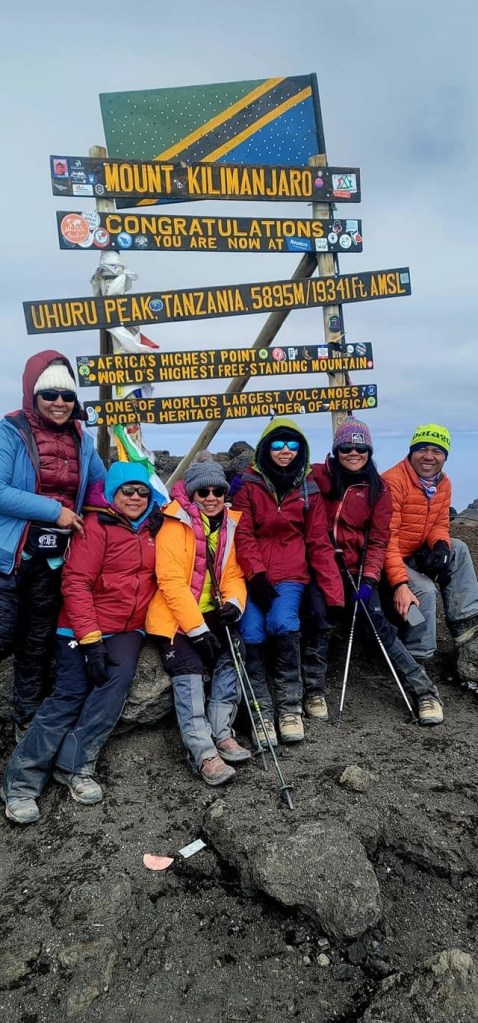
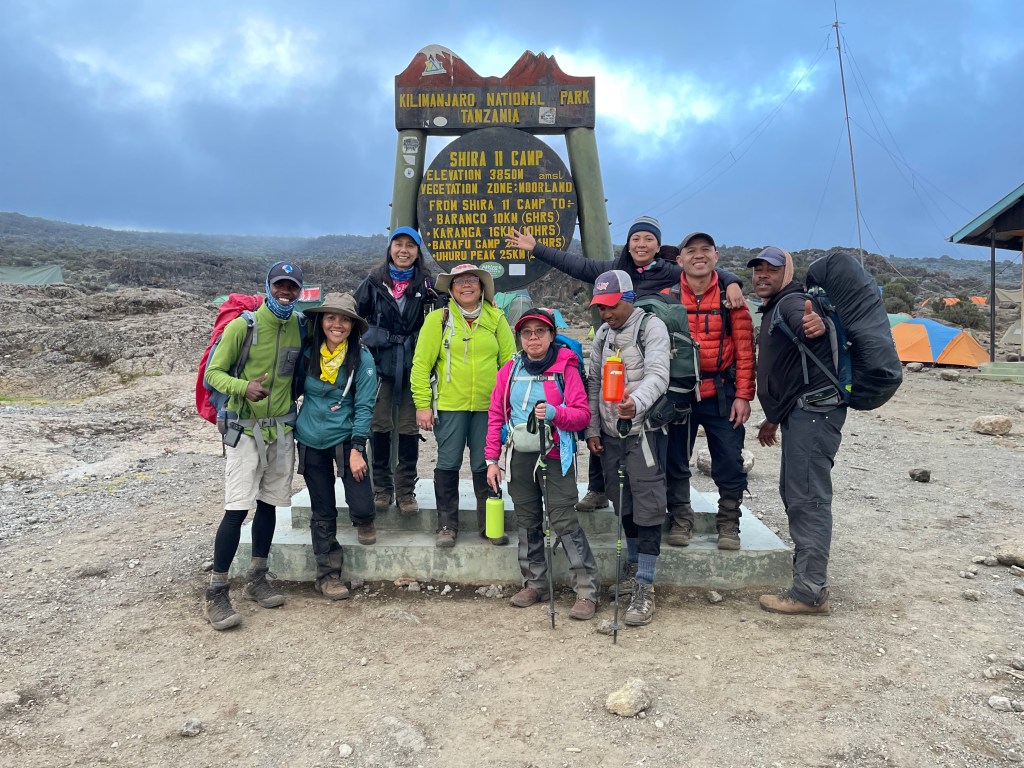
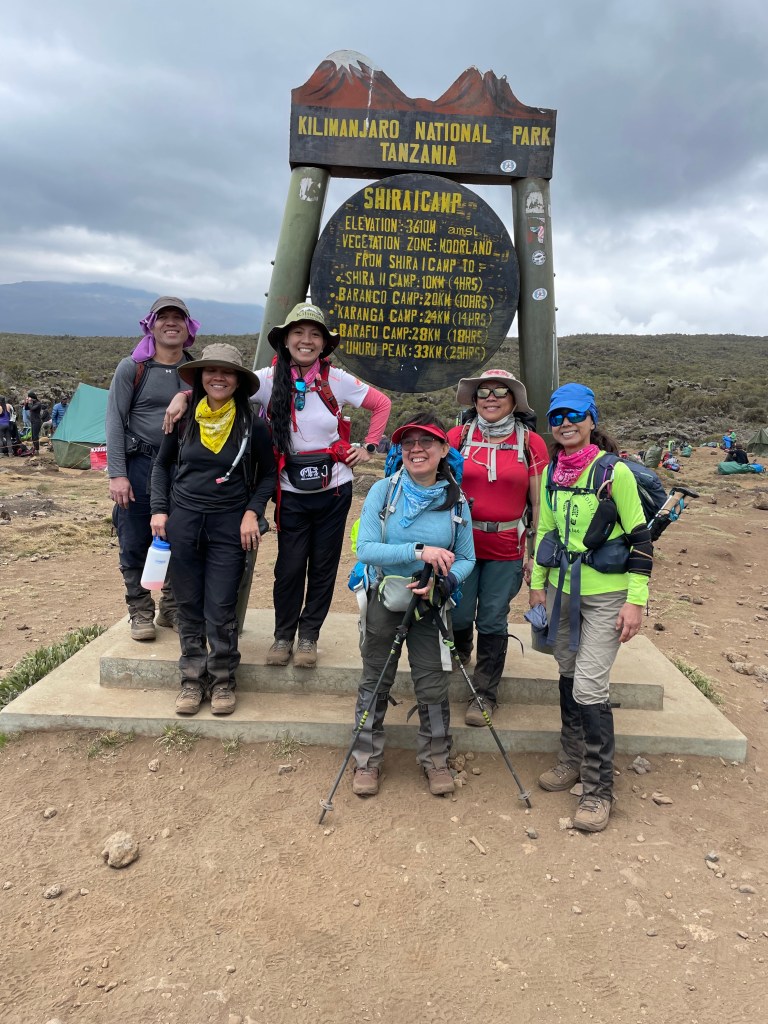
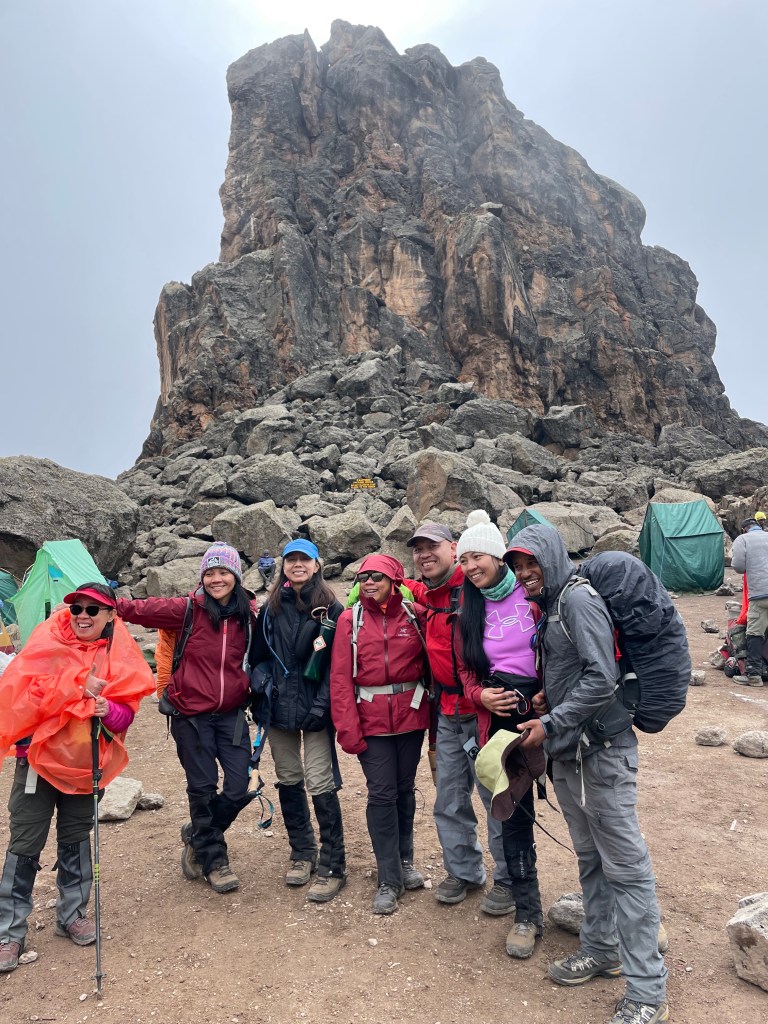
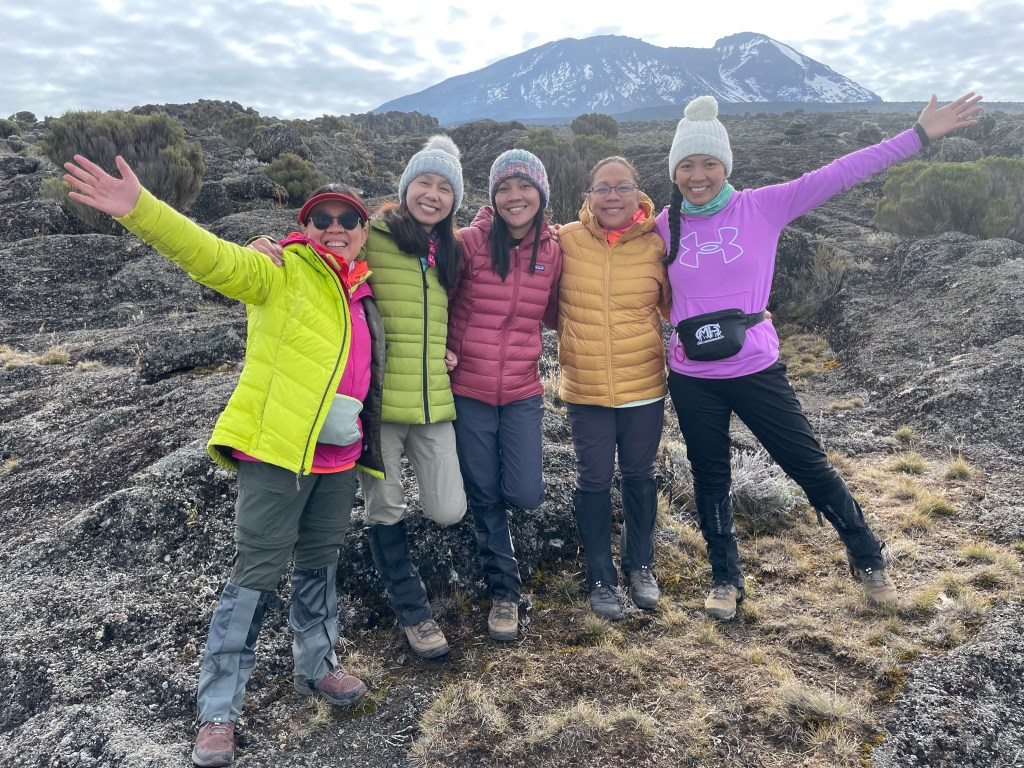
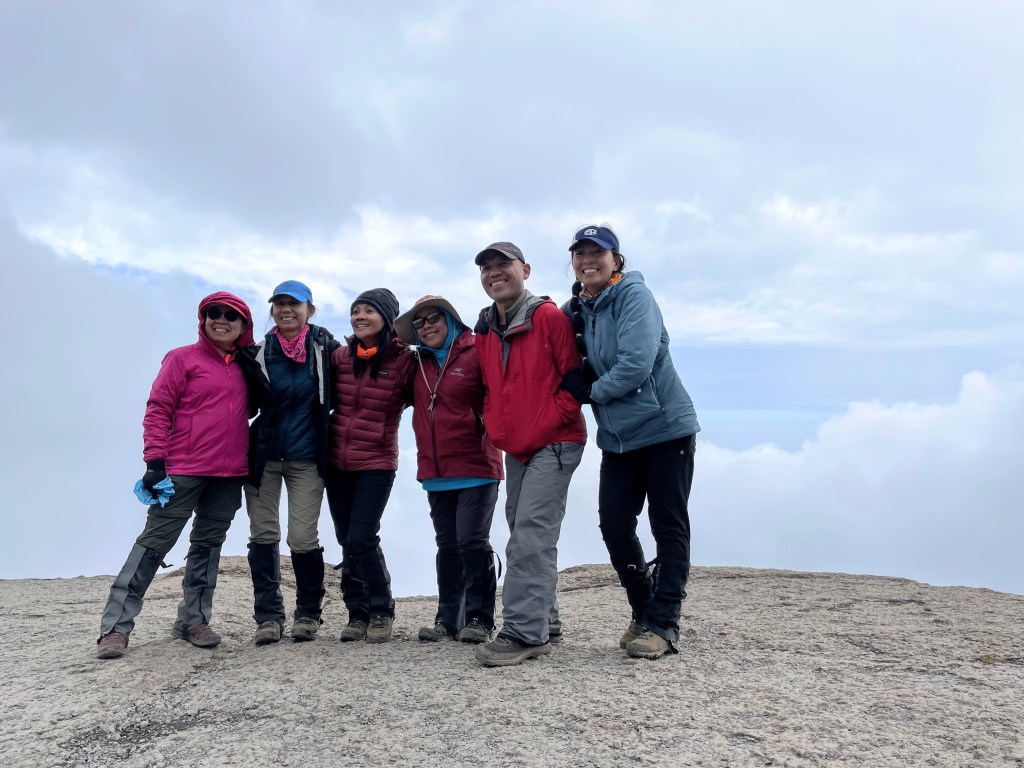
Our journey to climb Kilimanjaro started with a simple “maybe” among friends who shared a love for hiking. Soon, that “maybe” turned into a resounding “let’s do it!” And just like that, we found ourselves committed to conquering the mighty mountain. On February 17, 2023, a close-knit group was formed, consisting of myself (Lea), Candace, Amie, Lurene, Rose, and our lone gentleman, Jufer. Together, we flew to Tanzania, eager to embark on this unforgettable adventure. Our journey commenced with a stay at a modest hotel in Moshi, where excitement and anticipation filled the air as we prepared for the challenges that lay ahead.

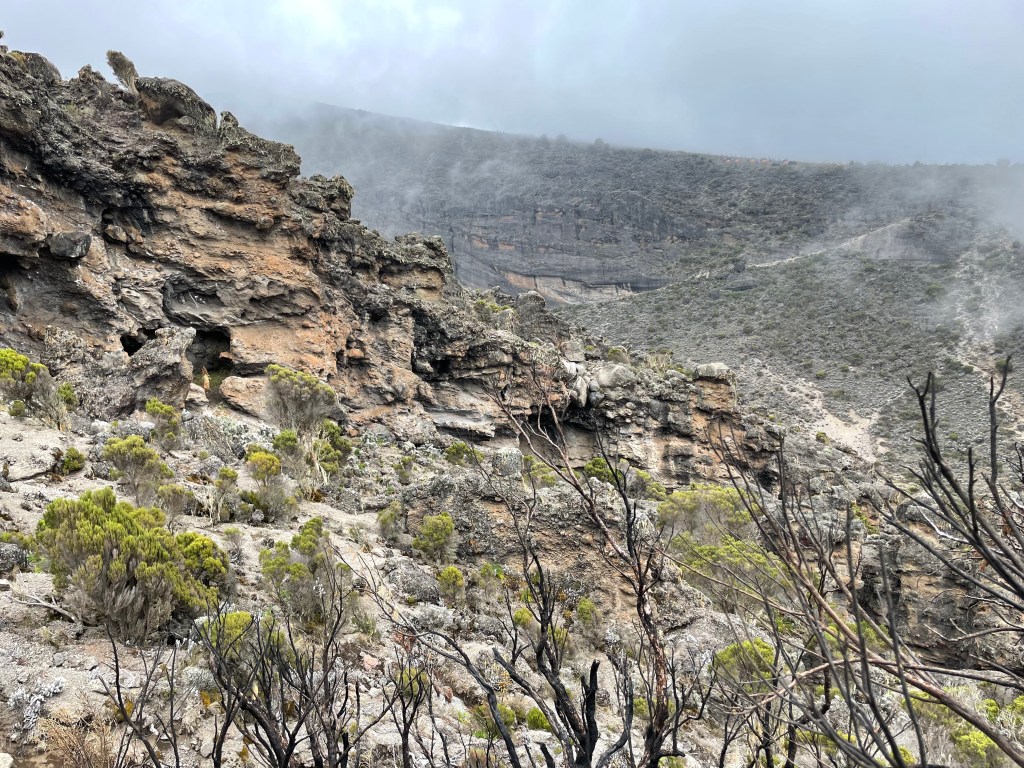
Nestled in the heart of Tanzania, Mount Kilimanjaro stood as a towering testament to human perseverance and the allure of adventure. For us, it represented more than just a summit to conquerโ€”it embodied resilience, determination, and the spirit of exploration. As we set foot on the Lemosho Route, renowned for its breathtaking scenery and gradual ascent, our excitement mingled with nerves. Each step forward brought us closer to the mountain, fueling our determination and strengthening the bond of camaraderie within our group.

[2.19] Day 1: Embarking on the Adventure

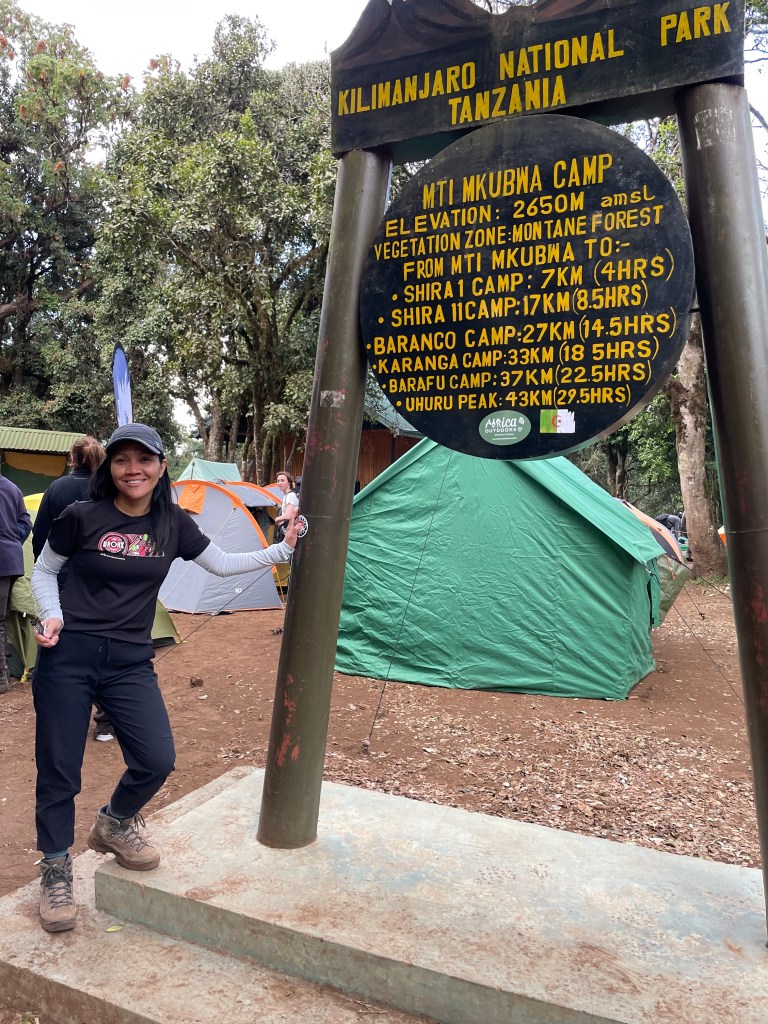
Our journey officially began at Londorossi Gate, marking the beginning of our trek along the Lemosho Route. The air buzzed with anticipation as we entered Kilimanjaro National Park, surrounded by the lush expanse of the rainforest. With each step, the symphony of the forest enveloped us, heightening our senses and fueling our excitement for the adventure ahead. However, as we ventured deeper into the jungle, Amie and I began to feel the unwanted effects of the malaria pills we had taken as a precautionary measure. Stomach aches and bouts of vomiting soon affected us, casting a shadow over our journey even before we reached our first campsite. Despite the discomfort, we pressed on, supporting each other through the challenging terrain and moments of adversity. It was a stark reminder of the unpredictable nature of adventure travel and the importance of resilience in the face of unexpected challenges.

Upon finally reaching our first campsite, Mti Mkubwa, a wave of relief washed over us. Grateful for the support of the group, we rested as the porters expertly set up camp, sparing us from further physical exertion after a demanding day on the trail.

Our ability to persevere through adversity served as a testament to the strength of our friendship and the unwavering spirit of adventure that fueled our journey. As we gathered around for dinner, sharing stories and laughter, it became evident that nothingโ€”not even illnessโ€”could dampen our resolve to conquer Kilimanjaro together.

[2.20] Day 2: A Journey Through Diverse Landscapes

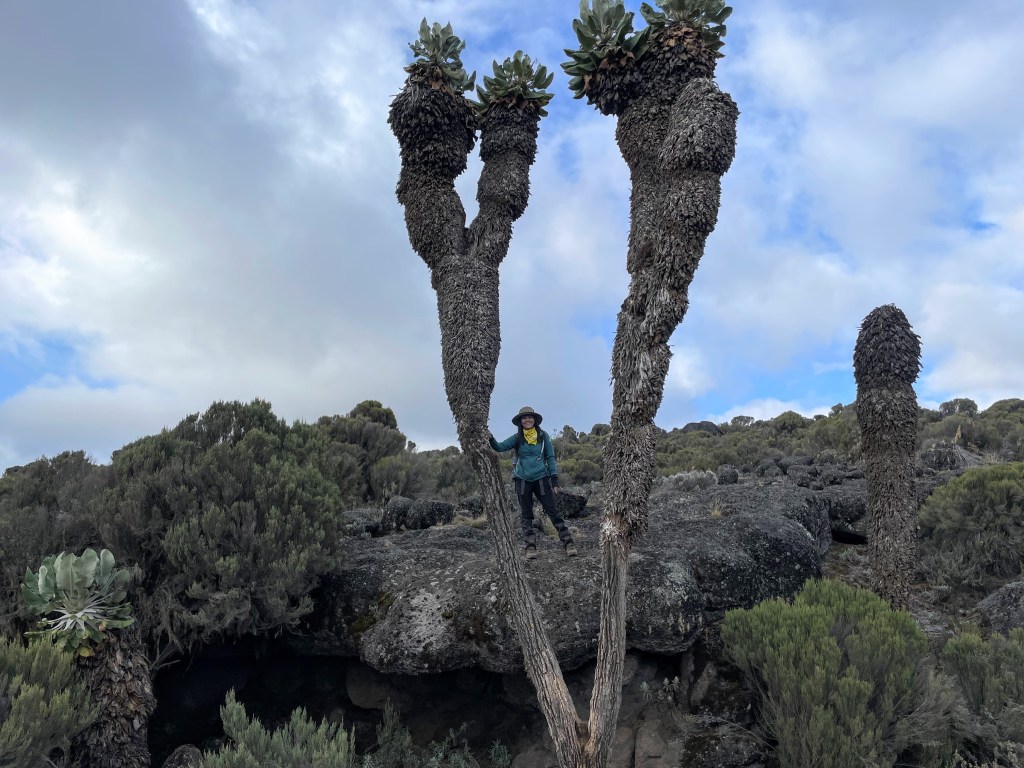
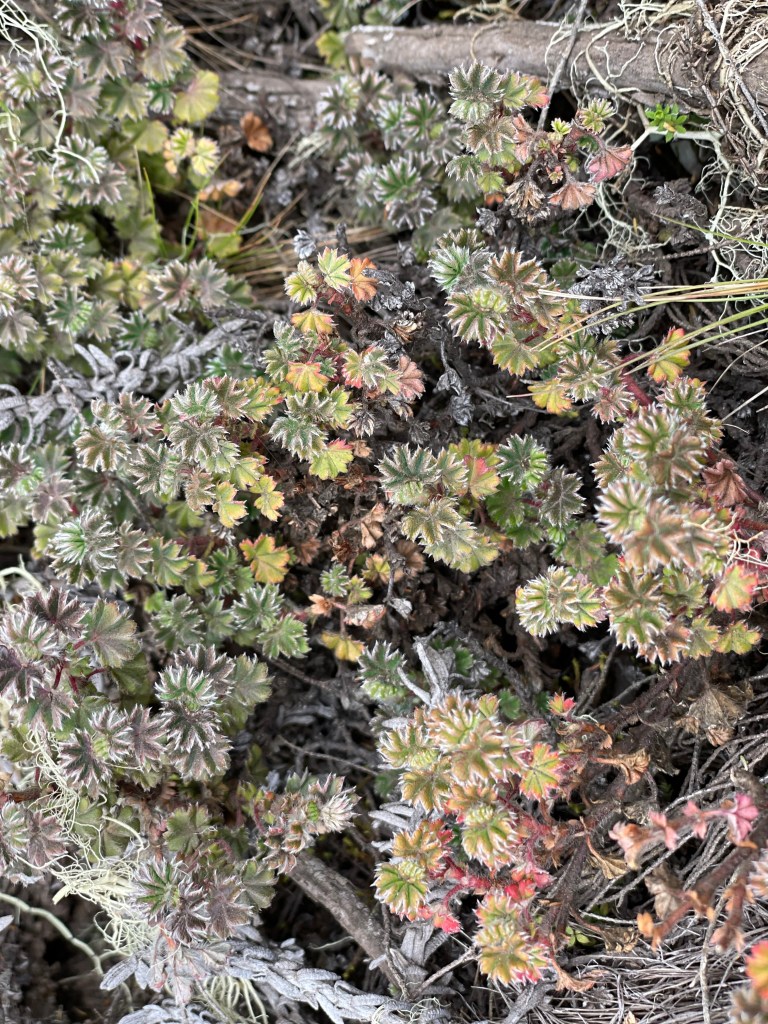
Departing from the embrace of Mti Mkubwa Camp, our spirits high and our resolve strong, we eagerly embarked on the journey ahead. The trail unfolded, guiding us through a captivating array of landscapes, from the dense foliage of the forest to the wide expanse of the moorland. Each turn revealed a new facet of Kilimanjaro’s diverse ecosystem, a testament to its unparalleled beauty. By midday, we found ourselves at Shira I Camp, surrounded by the grandeur of the Shira Plateau, where panoramic views of the surrounding peaks greeted us with awe-inspiring majesty. As the sun dipped below the horizon, painting the sky in vibrant hues, we settled into Shira II Camp for the night, grateful for the day’s adventures and the serenity of the mountain’s embrace.

[2.21] Day 3: Conquering Challenges Amidst Spectacular Views

Our third day was a delightful blend of anticipation and adventure as we trekked from Shira II Camp to Barranco Camp, with a memorable stop at Lava Tower en route. Leaving behind the breathtaking scenery of Shira II Camp, we pressed onward, eagerly embracing the journey that awaited us.

Ascending towards Lava Tower, we were treated to awe-inspiring vistas of Kilimanjaro’s towering peaks, each step unveiling a new facet of the mountain’s grandeur. The imposing rock formation of Lava Tower stood as a testament to nature’s majesty, providing a moment of reflection amidst our exhilarating trek.

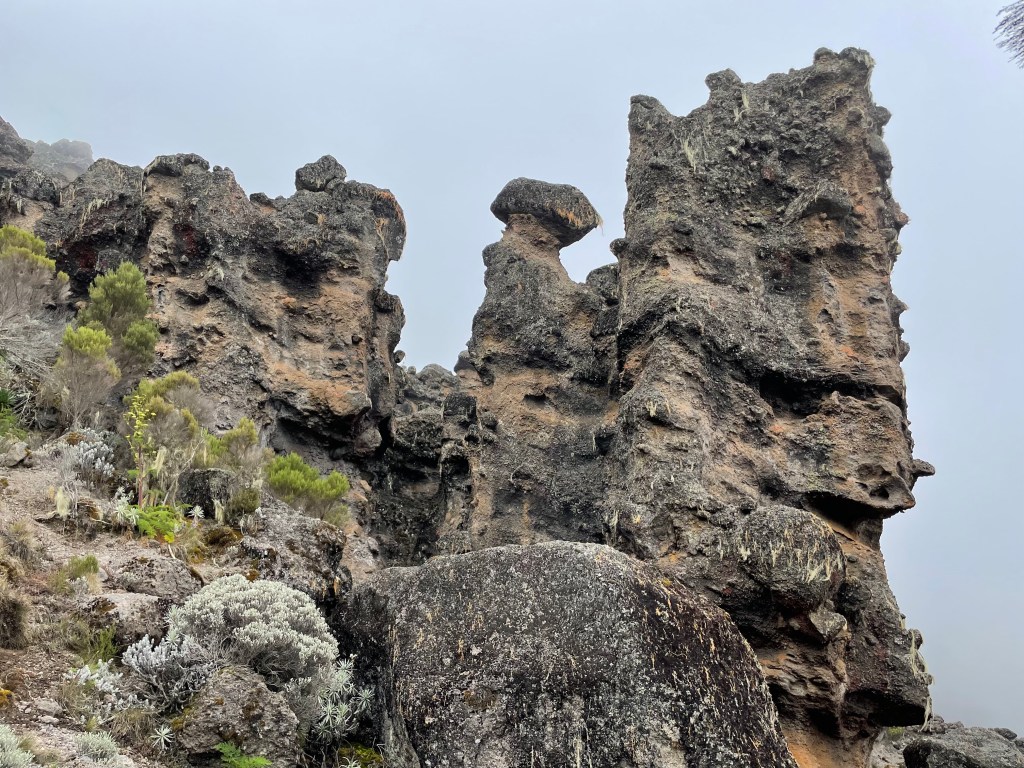
After savoring the beauty of Lava Tower, we commenced our descent towards Barranco Camp, navigating rocky trails with care and determination. Despite the challenges of the terrain, our spirits soared as we anticipated the warmth of camp and the camaraderie of our fellow trekkers.

Arriving at Barranco Camp, we were greeted by a heartwarming surprise from our portersโ€”a vibrant cultural show showcasing traditional music and dance from their Tanzanian heritage. Mesmerized by the rhythmic beats and colorful performances, we were swept up in the joyous celebration, grateful for the opportunity to experience the rich culture of our hosts.

As we gathered around for dinner, sharing tales of our day’s adventures, the bonds of friendship grew stronger, fueled by laughter and camaraderie. With the challenges of the day overcome and the promise of new experiences on the horizon, we drifted off to sleep, eager to embrace the adventures that awaited us in the days ahead.

[2.22] Day 4: Conquering Heights: Ascending the Barranco Wall

Amidst the awe-inspiring landscapes of the Lemosho Route, our journey unfolded, culminating in a challenging yet exhilarating ascent of the formidable Barranco Wall. Scaling its towering cliffs and navigating precarious rocky outcrops tested our resolve, but with every hard-won foothold, our determination surged. Upon triumphantly reaching the summit, greeted by panoramic vistas, a profound sense of accomplishment coursed through us. Descending into the rugged depths of the Karanga Valley, we pressed forward towards Karanga Camp, confronting its demanding terrain with unwavering perseverance. As the sun dipped behind Kilimanjaro’s peaks, casting a cloak of shadows, we found solace and renewal, steeled to confront the trials that awaited on our ascent to the summit.

[2.23] Day 5: Finding Strength in One Another

In the heart of the Karanga Valley, amidst the harsh beauty of high altitude, we discovered a strength within ourselves that we never knew existed. Supporting eace other and guided by experienced porters, we pressed onward, drawing inspiration from the camaraderie that surrounded us. With each step, we grew closer to our shared goalโ€”a bond forged through challenge and triumph. And as we arrived at Karanga Camp, with its stunning views of the surrounding peaks, we knew that our journey was far from over.

[2.24] Day 6: The Final Push Towards the Summit

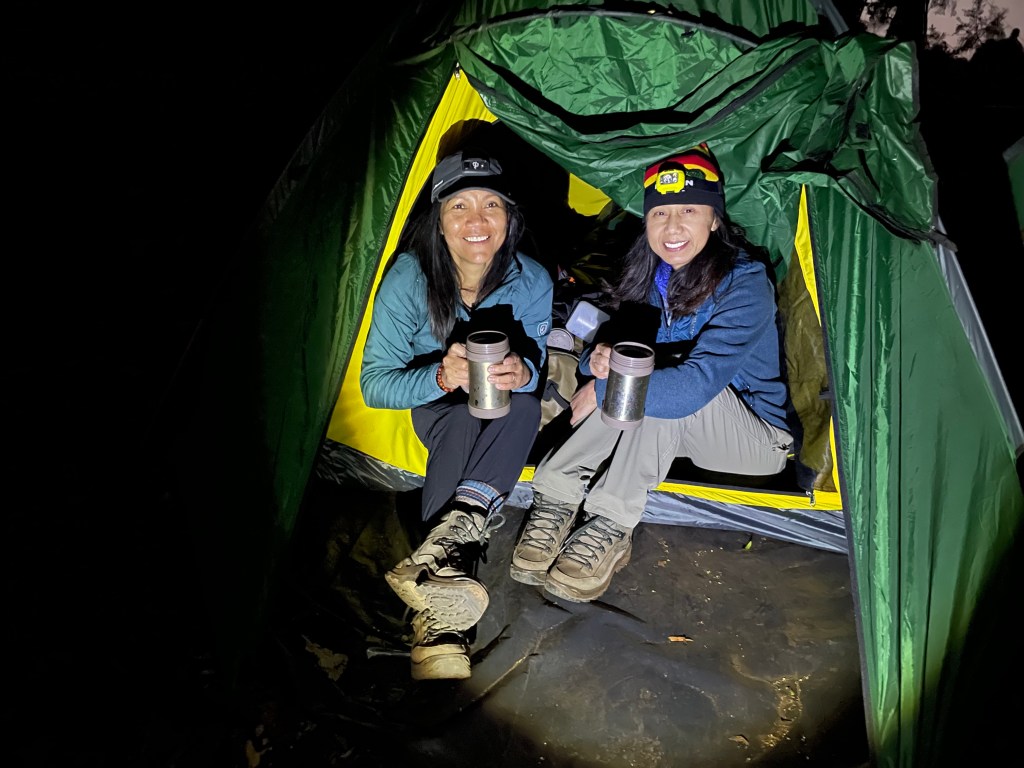
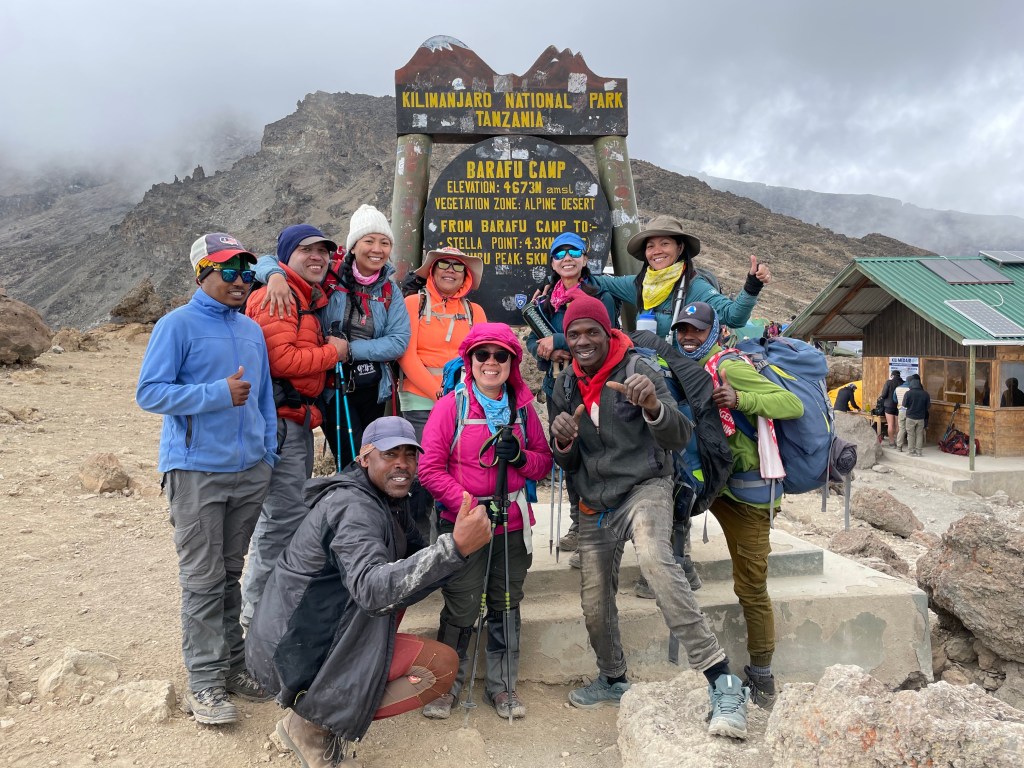
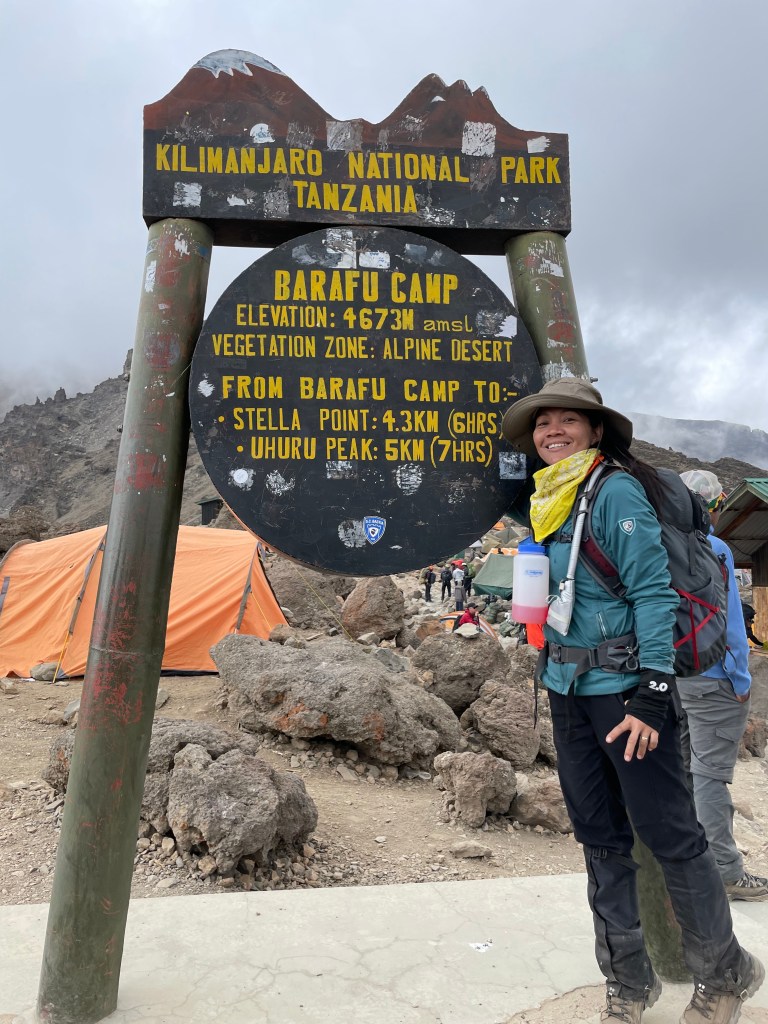
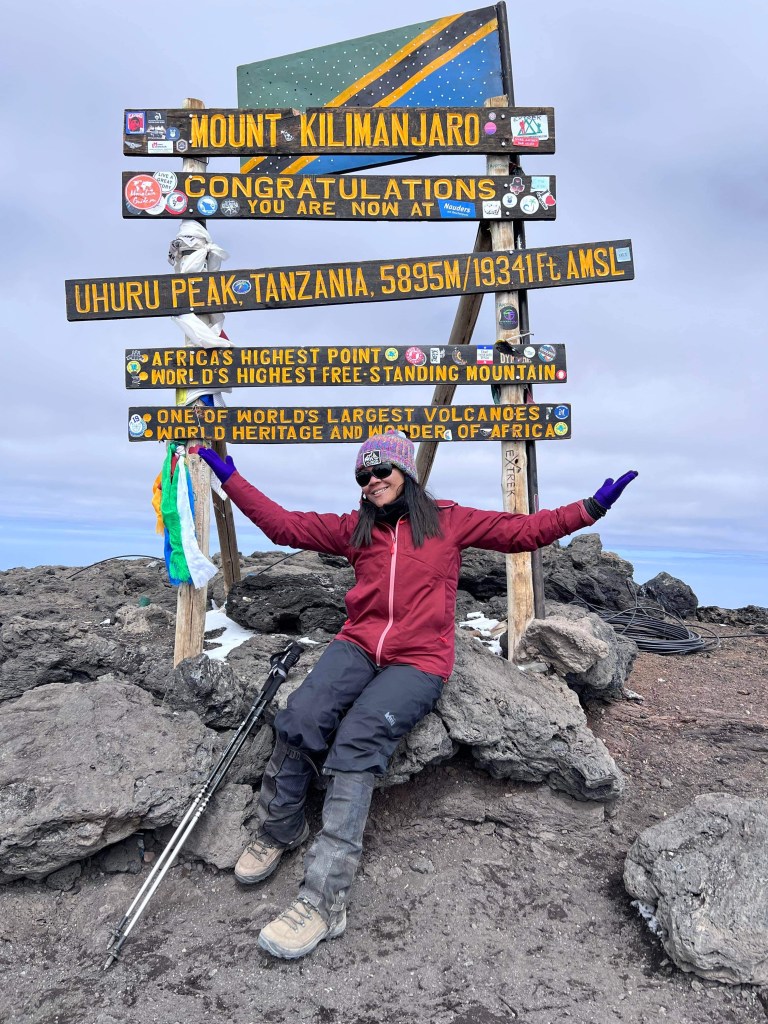
As we reached Barafu Camp, the base camp for our summit attempt, a sense of anticipation filled the air. We attempted to get some sleep and rest in the middle of the day. With our guides by our side and the summit within reach, we set forth into the darkness, our headlamps piercing the night like beacons of hope. With every step, the air grew thinner, our breaths labored with exertion. I realized how hard this quest was. Yet, with unwavering determination, we pressed onward, our hearts set on reaching the rooftop of Africa. We were gifted with the beautiful sunrise at Stella Point. For a brief moment we stopped and enjoyed it. And onwards we trek again to reach Uhuru Peak, the highest point in Africa. Bathed in the golden light of the morning sun, we knew that our journey had been worth every step.


As we descended from Kilimanjaro’s summit, our bodies were beyond exhausted but our hearts were full, and our souls enriched by the journey we had undertaken. Each day on this journey had tested our limits, strengthened our bonds, and filled us with a profound sense of accomplishment. And as we bid farewell to the mountain, we carried with us memories that would last a lifetime, along with the enduring camaraderie forged in the crucible of adventure.

The final leg of our day led us to our last campsite. With every step, we felt a sense of reverence for the mountain that had tested us and the friendships that had sustained us. As we reached the campsite, we were greeted by the welcoming sight of our tents and the familiar faces of our porters, who had supported us every step of the way.

[2.25] Day 7: Reflections & Farewells to the Mountain

As we awoke on the final day of our Kilimanjaro adventure, a bittersweet feeling washed over us. Our guides and the porters gave us a heartwarming send-off. Eager to return to civilization yet reluctant to bid farewell to the mountain that had become our home, we gathered our belongings and prepared for the descent to Mweka Gate.

Setting out through the lush rainforest, we marveled at the vibrant greenery and diverse flora that surrounded us, a stark contrast to the barren landscapes of the higher altitudes. The air was alive with the sounds of birdsong and rustling leaves, a welcome change from the silence of the summit.

With each step downwards, we reflected on the journey we had undertaken, the challenges we had overcome, and the friendships we had forged along the way. Despite the fatigue in our limbs, our spirits remained buoyant as we drew closer to the end of our adventure.

As we emerged from the forest and caught sight of Mweka Gate in the distance, a wave of mixed emotions swept over us. Relief mingled with nostalgia as we realized that our Kilimanjaro journey was coming to an end. Yet, amidst the farewells and final photographs, there was an undeniable sense of pride in what we had accomplished together.

Thanks for the memories Mt. Kilimanjaro!

Exploring Iceland


As I look back on my recent trip to Iceland, I'm filled with excitement all over again. Iceland is truly a land of contrasts, where fire and ice create an awe-inspiring landscape. And exploring it with my friend, Lorie made every moment even more special. From enjoying delicious Icelandic cuisine to chasing the Northern Lights and discovering the country's natural beauty, each experience was an adventure to cherish forever.

Day 1: Arrival and Culinary Delights

We landed in Reykjavik, brimming with excitement for the adventures awaiting us. Taking advantage of an early check-in, we wasted no time in delving into the city’s culinary offerings. After a power nap, we headed straight to Loa, a renowned restaurant serving up a feast of savory Icelandic dishes and mouthwatering pastries. Every bite introduced us to the rich flavors of Iceland, igniting our senses and fueling our anticipation for the journey ahead.

After satisfying our appetites and enjoying a leisurely stroll through downtown Reykjavik, where we meandered from the iconic Hallgrรญmskirkja Cathedral to the vibrant Skolavordustigur street (a.k.a. Rainbow Street), we decided to further explore Icelandic cuisine. Following recommendations, we made our way to Loki Cafรฉ for dinner, eager to delve into the country’s culinary traditions. Here, we embarked on a culinary adventure with the infamous fermented shark, accompanied by traditional rye bread. The experience was both daring and delightful, offering a unique taste of Iceland’s culinary heritage.

With our taste buds tingling and our bellies content, we continued to soak in the charm and energy of Iceland’s capital city, reveling in the memories of our culinary discoveries and eagerly anticipating the adventures that lay ahead.

Day 2: The Golden Circle and Aurora Quest

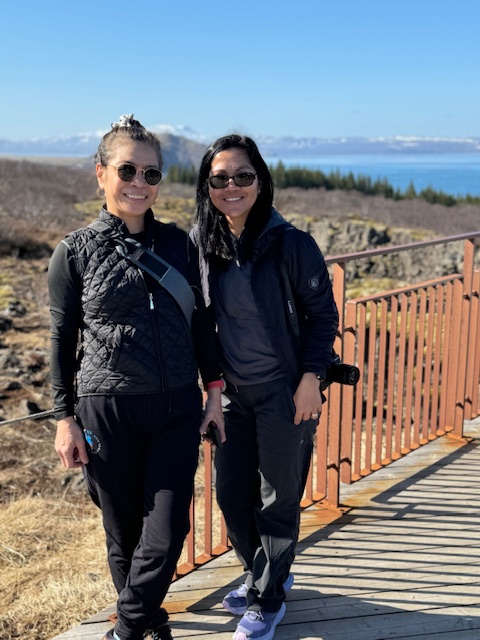
Our second day in Iceland was an extraordinary immersion into the country’s natural wonders, beginning with a visit to รžingvellir National Park, a UNESCO World Heritage Site. Here, we were enthralled by the striking landscape, walking along the rift valley formed by the meeting of the North American and Eurasian tectonic plates. The rugged terrain and the sheer magnitude of geological forces at play left us in awe.

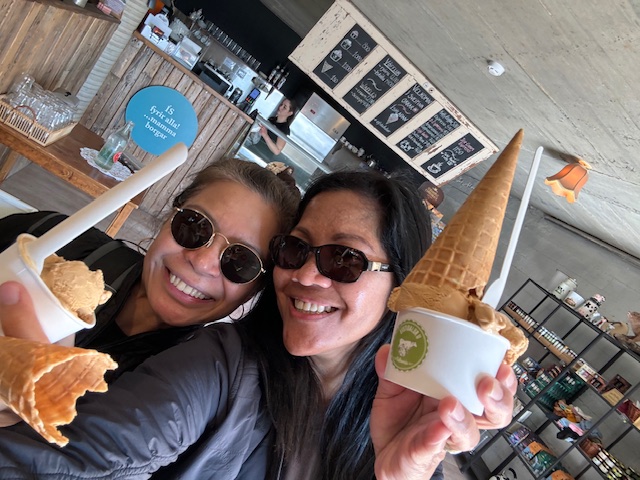
Continuing along the Golden Circle, we made a spontaneous stop at Efstidalur II, a charming family-run dairy farm. Surrounded by rolling hills and grazing cows, we indulged in creamy Icelandic ice cream, savoring each spoonful as we took in the picturesque scenery.

Refreshed and energized, we headed to the geothermal area of Geysir, where we were greeted by the bubbling mud pools and steaming vents. The highlight of our stop was witnessing the powerful eruptions of the Strokkur geyser, shooting columns of boiling water skyward in a mesmerizing display of nature’s raw power. We also made a quick stop on a hot spring where tourists get to experience to bake rye bread underground.

We continued our journey to the majestic Gullfoss waterfall, where we stood in awe of the roaring cascade plunging into the canyon below. The sheer magnitude and beauty of Gullfoss left us speechless, reminding us of the breathtaking wonders that Iceland has to offer.

As our stomachs began to rumble, we made our way to the Tomato Greenhouse, where we were treated to a lunch made with fresh, locally-grown tomatoes. Dining amidst rows of thriving tomato plants added a unique and flavorful twist to our Golden Circle adventure, tantalizing our taste buds and satisfying our hunger.

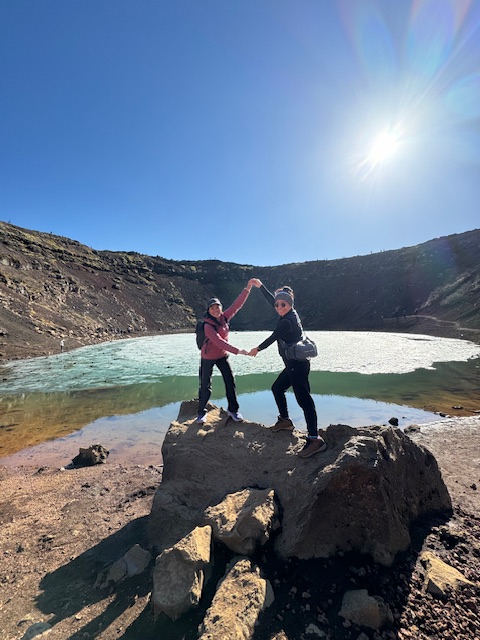
Before concluding our day, we made a spontaneous detour to Keriรฐ, a volcanic crater lake. The sight of the tranquil turquoise waters nestled within the crater’s rugged walls was a serene and captivating finale to our Golden Circle adventure, offering a moment of quiet reflection amidst the day’s excitement.

As night descended upon us, we eagerly joined a group in search of the elusive Northern Lights. Though the auroras remained elusive that evening, the experience of standing beneath the star-studded sky, surrounded by Iceland’s untamed landscapes, left an indelible mark on our hearts, capping off an unforgettable day of exploration and discovery.

Day 3: Museum Marvels and Culinary Exploration

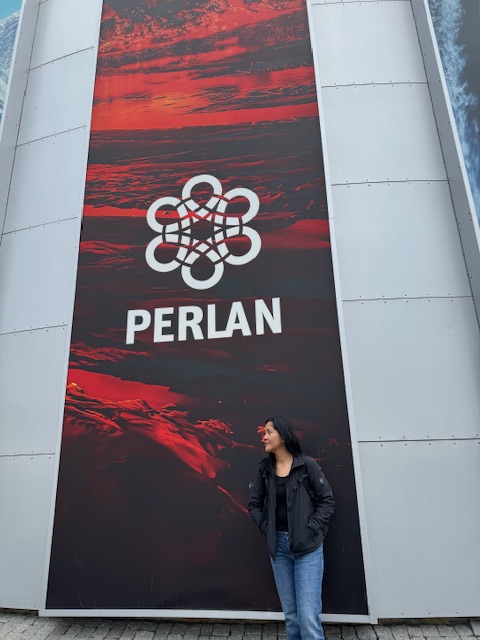
Our third day in Iceland promised a blend of intellectual stimulation and gastronomic delights. We began by immersing ourselves in the fascinating exhibits of the Perlan Museum, where we delved into Iceland’s rich history and geological wonders. From interactive displays showcasing volcanic eruptions to insightful presentations on glacial formations, every corner of the museum offered new insights into the land of fire and ice.

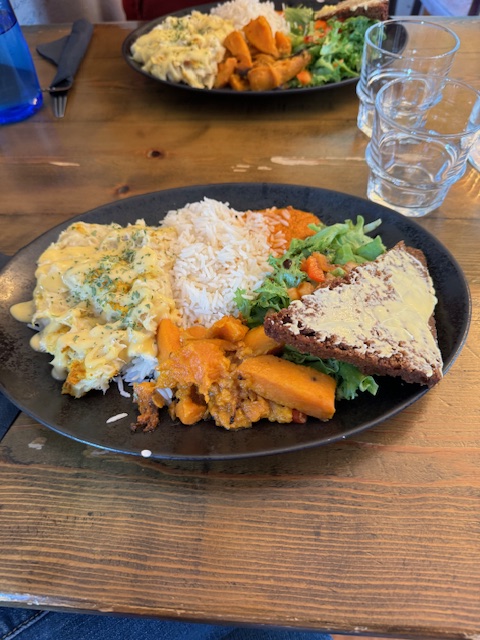
Eager to satisfy our growing appetite, we embarked on a culinary adventure at Mama, a delightful vegan restaurant nestled in Reykjavik’s culinary scene. Here, we were treated to a vibrant array of plant-based dishes, from hearty lentil stews to flavorful naan bread. Each bite was a testament to the creativity and innovation of Icelandic cuisine, proving that vegan dining could be both satisfying and delicious.

Day 4: Relaxation and Curiosity

Our fourth day in Iceland was a perfect balance of relaxation and curiosity, beginning with a visit to the iconic Blue Lagoon. Nestled amidst the otherworldly lava fields, this geothermal spa offered a tranquil oasis where we could unwind and rejuvenate amidst the mineral-rich waters. As we soaked in the soothing warmth, surrounded by the rugged beauty of our surroundings, we couldn’t help but feel a deep sense of serenity and awe.

After a blissful morning at the Blue Lagoon, our curiosity led us to the Phallological Museum, a quirky yet fascinating attraction that offered a unique glimpse into Iceland’s cultural quirks and traditions. Exploring the eclectic collection of phallic specimens, from mammalian to marine, we were intrigued by the museum’s humorous yet educational approach to the subject matter. It was definitely an interesting and memorable experience.

Day 5: South Coast Wonders

Venturing beyond Reykjavik, we embarked on a tour of the South Coast, eager to explore the untamed beauty of Iceland’s countryside. Our journey began with a scenic drive along the rugged coastline, where towering cliffs and crashing waves greeted us at every turn.

Our first stop was Seljalandsfoss, a majestic waterfall cascading from a height of over 60 meters. Here, we were mesmerized by the sheer power and beauty of nature as we stood in awe of the thundering waters and felt the cool mist on our faces. The next stop is Skรณgafoss which equally mesmerized us with its its towering presence and thundering cascades of water. The sight of rainbow arching gracefully was truly captivating.

Continuing our adventure, we made our way to the iconic black sand beach of Reynisfjara, where towering basalt columns rose from the volcanic shores. Against the backdrop of the wild Atlantic Ocean, we felt a sense of wonder and reverence for Iceland’s dramatic landscapes.

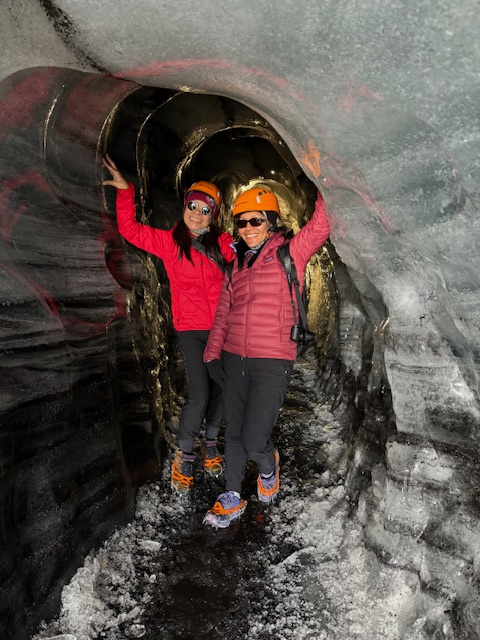
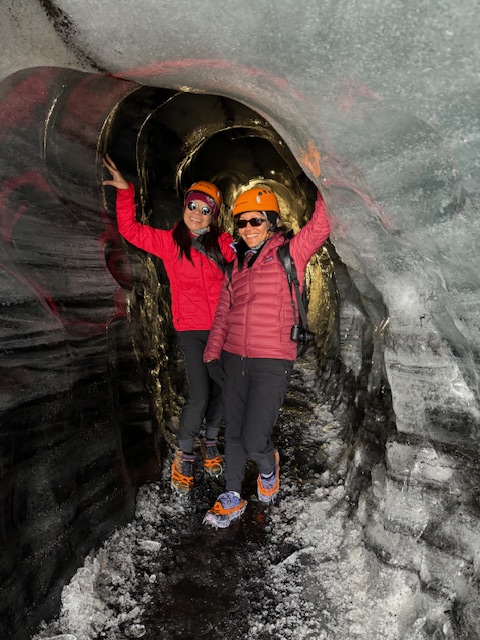
Next on our itinerary was the mesmerizing Katla Ice Cave, a hidden gem nestled beneath the Mรฝrdalsjรถkull glacier. As we ventured into the cave, we were surrounded by walls of ice. It was a surreal experience that left us breathless and in awe of the natural forces at work.

As a fun fact, we learned that several Hollywood movies and TV shows have used Iceland’s stunning landscapes as filming locations, including scenes from “Game of Thrones,” “Interstellar,” and “Star Wars.” Standing in the midst of these cinematic settings, we couldn’t help but feel like we were part of our own epic adventure.

As the day drew to a close, we embarked on our second quest for the elusive Northern Lights. With clear skies and a sense of anticipation, we ventured into the darkness, hoping to witness nature’s most dazzling display. Though the auroras remained elusive, the experience of standing beneath the star-studded sky, surrounded by Iceland’s untamed wilderness, was a reminder of the beauty and mystery of the natural world.

As we returned to Reykjavik, tired but exhilarated from our day of exploration, we couldn’t help but feel grateful for the opportunity to witness Iceland’s South Coast wonders and the magic of the Northern Lights, a testament to the extraordinary beauty of this land.

Day 6: Reykjavik Neighborhoods and Beyond

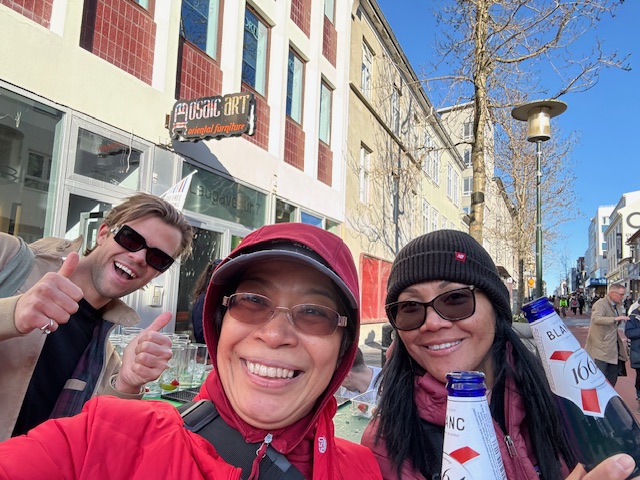
We embarked on a day of exploration, eager to uncover the hidden treasures of the city’s vibrant neighborhoods and neighboring towns. Starting in Laugavegur, we wandered through narrow alleys lined with colorful houses, soaking in the charm and history of this centuries-old area. The towering spire of Hallgrรญmskirkja Cathedral provided a striking backdrop as we strolled through the cobblestone streets, discovering quaint cafes, boutique shops, and local galleries along the way.

Continuing our journey, we found ourselves drawn back to the modern architecture of Harpa Concert Hall, where the striking glass facade shimmered in the sunlight. Venturing beyond the city limits on public buses, we explored the surrounding neighborhoods and towns, each offering its own unique blend of Icelandic charm and community spirit. From the tranquil coastal village of Hafnarfjรถrรฐur to the bustling suburb of Kรณpavogur, we saw picturesque landscapes, and hidden gems waiting to be discovered.

Day 7: Sky Lagoon

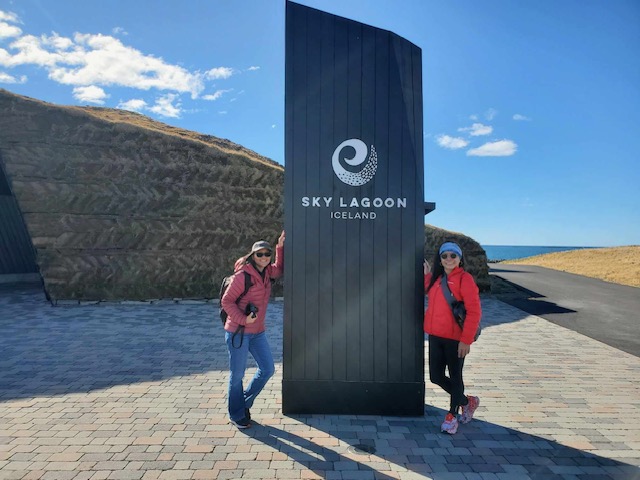
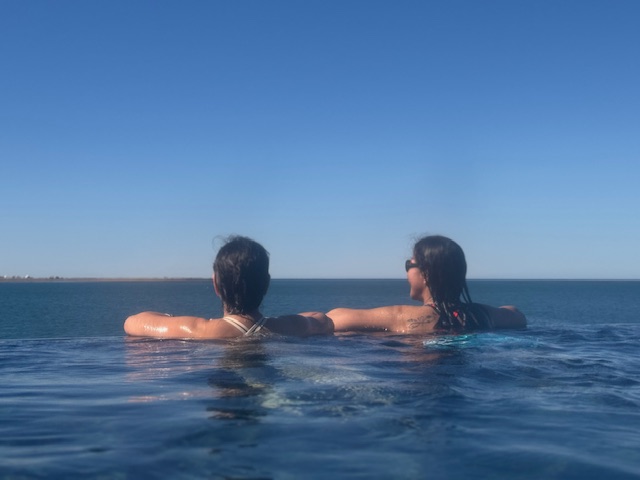
As our Icelandic adventure drew to a close, we sought solace and relaxation at the breathtaking Sky Lagoon. Perched on the edge of the North Atlantic Ocean, this geothermal oasis offered panoramic views of the surrounding seascape, creating a sense of tranquility and serenity.

Immersing ourselves in the soothing waters, we let go of the stresses of everyday life and reflected on the journey we had undertaken. From the majestic landscapes of the Golden Circle to the bustling streets of Reykjavik, each moment had been filled with wonder and discovery.

As the sun dipped below the horizon, casting a golden glow over the horizon, we felt a profound sense of gratitude for the experiences we had shared and the memories we would carry with us. The beauty of Iceland’s landscapes was matched only by the warmth and kindness of its people.

Throughout our journey, we encountered countless individuals who went out of their way to make our trip unforgettable. From the hotel staff who greeted us with genuine smiles and made us feel at home, to the tour guides who shared their knowledge and passion for Iceland’s natural wonders, we were continually touched by their hospitality and generosity.

As we bid farewell to Iceland, we carried with us not only memories of its breathtaking landscapes but also a deep appreciation for the kindness and warmth of its people. Their hospitality had enriched our journey in ways we could never have imagined, leaving an indelible mark on our hearts.

With renewed energy and hearts full of memories, we boarded our flight home, knowing that while our time in Iceland had come to an end, its beauty and magic would stay with us forever.

Till next time Iceland…xoxo

Belize on my Mind

Itโ€™s been a little over three months since I returned from Belize, where I participated in an Earth Expedition class with Miami Universityโ€™s Global Field Program. The trip was nothing short of transformativeโ€”a blend of education, adventure, and connection that allowed me to learn from both the natural world and the incredible individuals who dedicate their lives to conservation.ย ย 

Now that Iโ€™m back to my routine as a teacher, mom, wife, and student, life can feel like a whirlwind. Balancing these roles is challenging, and there are days when I question my ability to keep going. But when I reflect on my time in Belize, I find clarity. The experiences I had, the lessons I learned, and the connections I made reaffirm my purpose: to be a more effective teacher who inspires young people to become stewards of the environment and advocates for its protection.

One of the most powerful lessons I took away from Belize was the importance of passion. Our hosts exemplified this through their work. Celso shared his dedication to conserving tapirs, highlighting the delicate balance of human-wildlife coexistence. Jamal showed us the intricate efforts involved in protecting the yellow-headed parrots, from habitat restoration to community education. Jamal Gโ€™s commitment to safeguarding manatees underscored the importance of marine ecosystems, while Sharonโ€™s tireless work at the Belize Zoo demonstrated how education and rehabilitation can transform perceptions of wildlife. Each of them faced significant obstacles, yet their passion drove them forward, inspiring everyone they touched.IMG_3536

I enrolled in the Earth Expedition class to gain hands-on fieldwork experienceโ€”a gap Iโ€™d always felt in my skill set. Belize did not disappoint. From the moment we landed, we were immersed in opportunities to practice data collection and scientific inquiry. We conducted three inquiry projects, each requiring us to collaborate, adapt, and apply new techniques. These experiences pushed me beyond my comfort zone, making every challenge feel worthwhile.

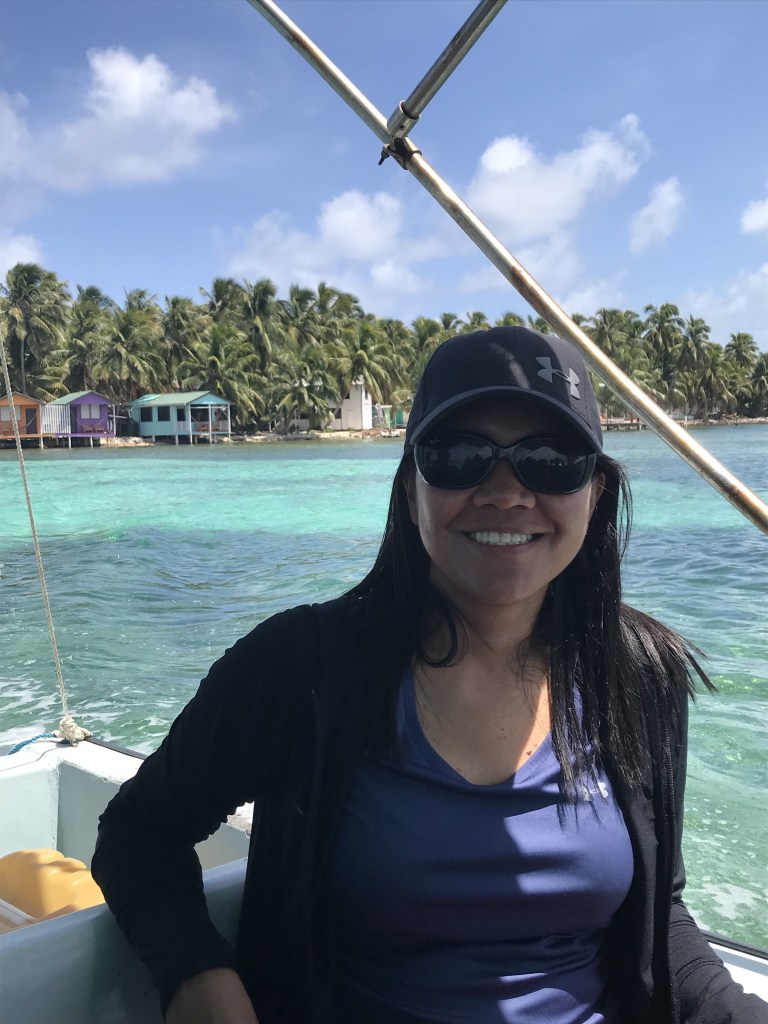
One moment that stands out was snorkeling. Iโ€™ve always been nervous around water because I donโ€™t know how to swim, but I was determined to participate. Equipped with a life vest and buoyed by the encouragement of my instructors and peers, I ventured into the water. The experience was surreal: floating above vibrant coral reefs, observing schools of fish darting through the seagrass, and feeling the gentle pull of the ocean. I snorkeled not just once, but four times during the trip. Each time, I felt a mix of exhilaration and gratitude. When I shared this story with my students, I was overwhelmed with emotion, and I could see that my vulnerability resonated with them. I hope it inspired them to confront their own fears and embrace growth.

Other unforgettable moments included:

  • A night tour at the Belize Zoo, where the calls of nocturnal animals like owls and jaguars filled the air, and we observed creatures like kinkajous and crocodiles under the moonlight.
  • Witnessing howler monkeys in their natural habitat, their haunting calls echoing through the jungle canopy.
  • A cultural presentation at the Community Baboon Sanctuary, where we learned about the history and traditions of the local Creole community. The homestay there was equally enriching, as we shared meals, stories, and laughter with our hosts.
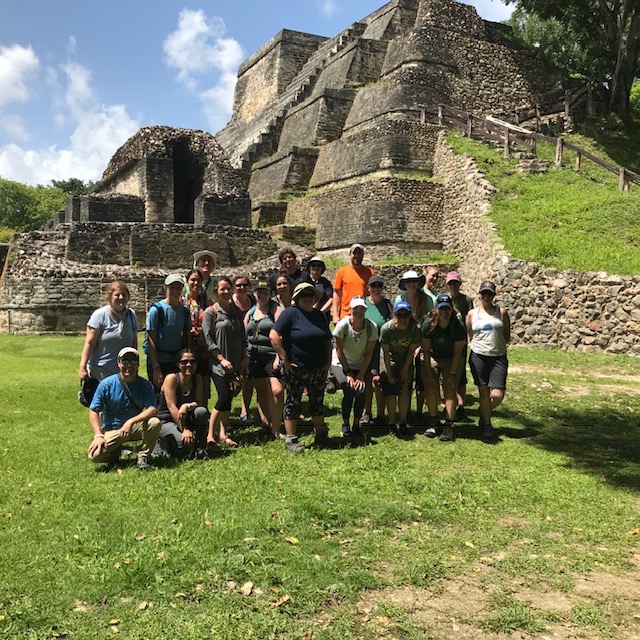
  • Exploring the ancient Mayan ruins of Altun-Ha, where we climbed towering stone structures and imagined the lives of the people who once thrived there.
  • Participating in manatee monitoring, where we observed these gentle giants gliding gracefully through the water, and learning to assess seagrass health, a vital indicator of marine ecosystem stability.
  • Birdwatching at dawn, identifying species like toucans and herons, and marveling at their vibrant plumage and distinctive calls.
  • Snorkeling in the mangroves, where we discovered a hidden world of juvenile fish, crabs, and intricate root systems that provide shelter and nourishment to countless marine species.

Through these experiences, I was reminded of the irreplaceable value of nature. The beauty, complexity, and interconnectedness of Belizeโ€™s ecosystems underscored the urgency of conservation. My greatest takeaway is that we all have a role to play in preserving this planet for future generations. Whether through education, advocacy, or small daily actions, we must ensure that the natural world remains a source of wonder and inspiration.

Belize reignited my passion for conservation and strengthened my resolve to bring these lessons into my classroom. I want my students to not only learn about the environment but also feel empowered to protect it. This journey has become a part of my story, and I hope it will inspire others to embark on their own paths toward stewardship and connection with the natural world.